Washable versus replaceable air purifier filters
Quick answer
A washable pre-filter captures coarse debris like hair and lint and can be rinsed and reused, but the true HEPA media doing the fine-particle work behind it is a separate, non-washable component that still needs periodic replacement or cleaning per the manufacturer’s instructions; a "permanent HEPA" claim is worth checking closely against what the listing actually says that permanence covers.
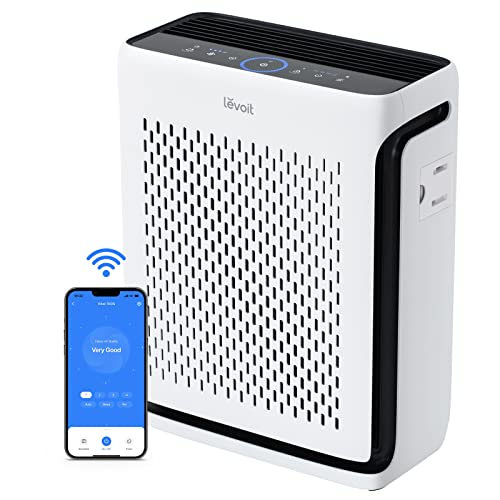
LEVOIT Air Purifier for Home Pets Bedroom Dorm Room Washable Pre-Filter
This unit pairs a washable pre-filter with a separate true HEPA and carbon layer behind it, the honest version of this design: the washable part extends the life of the part that still needs eventual replacement, rather than replacing it.
Coverage claims vary in what air change rate they assume, so check a published airflow figure against your own room rather than the room size on the box.
| Filter type | What it captures | Maintenance |
|---|---|---|
| Washable pre-filter | Hair, lint, coarse dust | Rinse or vacuum periodically, reusable many times |
| True HEPA media | Fine particulate down to 0.3 micron at 99.97 percent | Not washable in most designs; replace per manufacturer interval |
| Activated carbon | Odors and some VOCs, via adsorption | Saturates over time; not washable, needs replacement |
| "Permanent HEPA" claim | Varies by product | Check exactly what part of the system the claim covers |
What a washable pre-filter is actually for
A washable pre-filter sits in front of the main filtration media and catches larger particles, pet hair, lint, and coarse dust, before they ever reach the true HEPA or carbon layer behind it. Rinsing or vacuuming it periodically removes that buildup and restores airflow, and it can be reused many times over the life of the machine.
Its main practical benefit is economic: by intercepting the coarse debris that would otherwise load the more expensive HEPA or carbon media, a washable pre-filter extends the interval before that pricier component needs replacing, covered in more depth in `/guides/how-often-to-change-a-filter/`.
A washable pre-filter also gives an owner a quick, free maintenance option between full filter replacements: rinsing off visible hair and dust restores some airflow immediately, at no cost, in a way that is not possible with the HEPA or carbon layer behind it. This does not replace the eventual need to swap the HEPA or carbon media on its own schedule, but it is a genuinely useful stopgap for extending the visible cleanliness of the machine’s intake between those scheduled replacements.
Why a washable pre-filter is not a washable HEPA filter
True HEPA media is constructed from a dense mat of fine fibers engineered to trap particles down to 0.3 micron through interception, impaction, and diffusion. Washing that media with water in most designs damages the fiber structure and can permanently reduce its capture efficiency, which is why manufacturers of true HEPA filters almost universally specify replacement rather than washing for that specific layer.
A unit that advertises a "washable filter" is very often describing the pre-filter stage specifically, not the HEPA media doing the fine-particle work. Reading the listing or manual carefully to see which stage the washable claim actually applies to avoids the assumption that the whole filtration system needs zero ongoing replacement cost.
Some designs use a different, genuinely washable filtration approach instead of true HEPA media entirely, commonly an electrostatic or mesh-based filter that captures particles through static charge rather than the mechanical interception, impaction, and diffusion described in `/guides/how-hepa-filters-work/`. These designs can legitimately be washed and reused without the same degradation true HEPA media suffers, but they generally do not carry the 99.97 percent removal rating at 0.3 micron that true HEPA carries, which is a real, checkable tradeoff rather than a marketing distinction.
Why a "permanent HEPA" claim deserves a closer look
Some products market a "permanent" or "never replace" HEPA-branded filter, which is worth checking against exactly what the claim covers: whether the true HEPA-rated media itself is genuinely washable and reusable without efficiency loss, or whether "permanent" refers only to a washable pre-filter or electrostatic stage paired with a separate consumable component elsewhere in the system.
This is not a claim this page makes about any specific product beyond what its own listing states; it is a pattern worth checking for, since "permanent" and "true HEPA at 99.97 percent efficiency" are two claims that do not automatically travel together, and a shopper comparing the total cost of ownership between two machines needs to know which one they are actually buying.
Brand names built around this idea, describing a filter as never needing replacement, are worth reading past the name and into the actual specification: some genuinely pair a washable pre-filter with a true HEPA layer behind it and are transparent that the HEPA layer still has its own eventual replacement or cleaning schedule, while the name itself emphasizes the pre-filter’s washability rather than claiming the whole system needs zero ongoing attention. The listing’s actual filter specification, not the product name, is the reliable source here.
What activated carbon adds to this picture
Activated carbon layers, present in many units alongside HEPA media, remove odors and some VOCs through adsorption, a physical process where gas molecules bind to the carbon’s surface area. Carbon media saturates over time as its available binding surface fills up, and it is not washable or reusable once saturated; it needs replacement on its own schedule, often shorter than the HEPA layer’s, particularly in households with strong or frequent cooking odors.
Some combined filter cartridges bond a thin carbon layer directly onto the HEPA media as a single unit, which is convenient but means both layers get replaced together on the HEPA layer’s schedule, even if the carbon saturates faster on its own. Other designs use a separate, swappable carbon layer that can be replaced on its own shorter schedule without discarding the still-good HEPA media alongside it, which can be the more cost-effective design for a household with a strong, frequent odor source.
How to weigh washable versus replaceable when shopping
A unit with a genuine washable pre-filter in front of a standard replaceable true HEPA and carbon setup offers a real, if modest, ongoing cost saving by extending the replacement interval of the pricier components. A unit claiming a fully washable HEPA-equivalent filter with no listed replacement schedule is either using a different, non-HEPA filtration approach, or making a claim worth verifying carefully before assuming zero ongoing filter cost. `/tools/filter-cost-calculator/` and `/guides/air-purifier-running-costs/` cover running that total cost of ownership comparison directly.
The practical checklist before buying based on a washable filter claim: confirm whether the claim covers the pre-filter or the true HEPA media itself, confirm whether the unit still lists a HEPA or carbon replacement interval anywhere in its specifications, and price out that replacement on the same annual basis as a standard replaceable unit before assuming the washable design is automatically the cheaper option to own over several years.
How to actually wash a pre-filter without damaging it
Most manufacturers recommend rinsing a washable pre-filter with plain water and letting it air dry completely before reinstalling it, since reinstalling a damp pre-filter can promote mould growth inside the machine and trap moisture against the HEPA media behind it. Avoid harsh detergents or scrubbing unless the manual specifically allows it, since some pre-filter materials are more delicate than the name "washable" suggests and can tear or lose their mesh structure under rough handling.
A pre-filter that has visibly thinned, torn, or lost its shape after repeated washing is no longer doing its coarse-capture job effectively, even though it can technically still be rinsed. Replacing a worn-out pre-filter, where the manufacturer sells one separately, is a small, infrequent cost compared to the HEPA or carbon replacement it is meant to protect, and it is worth doing once the pre-filter itself starts to visibly degrade.
Equipment mentioned on this page
- MOOKA
MOOKA H13 HEPA Air Purifier for Home Pet Large Room Up to 1300ft2, Black
- HEPA claimed
- carbon stage
- has a UV lamp
$46.98 Check pricePrices change often - MOOKA
MOOKA Air Purifiers for Home Room up to 1076ft2, True HEPA Filter, B-D02L
- HEPA claimed
- carbon stage
$49.99 Check pricePrices change often - MOOKA
MOOKA Air Purifiers for Home Room up to 1076ft2, True HEPA Filter, B-D02L
- HEPA claimed
- carbon stage
$49.99 Check pricePrices change often - Clorox
Clorox Small Room Air Purifiers for Bedroom Home, True HEPA Filter
- HEPA claimed
$59.95 Check pricePrices change often - Afloia
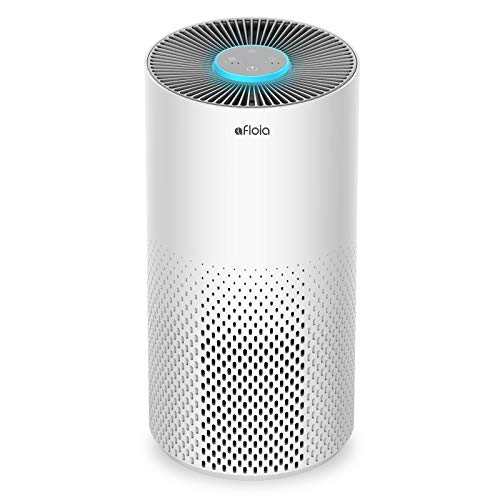
Afloia Air Purifier for Home Bedroom Large Room up to 1500 Sq Ft
- washable pre-filter
$59.97 Check pricePrices change often


Common questions
Can I wash a true HEPA filter with water?
Generally no. Washing most true HEPA media with water damages the fine fiber structure that traps particles through interception, impaction, and diffusion, which can permanently reduce its capture efficiency. Manufacturers of true HEPA filters typically specify replacement, not washing, for that specific layer.
What is the difference between a washable pre-filter and a washable HEPA filter?
A washable pre-filter catches coarse debris like hair and lint ahead of the main filtration stage and is designed to be rinsed and reused. A "washable HEPA filter" claim refers to the actual fine-particle media itself being washable, which is a much rarer and more specific claim worth verifying against the listing, since most true HEPA media is not water-washable.
Does a washable pre-filter mean I never need to buy a replacement filter?
No, in most designs. A washable pre-filter extends the life of the true HEPA and carbon media behind it by catching coarse debris first, but that HEPA and carbon media is a separate component that still needs periodic replacement on its own schedule.
What should I check before trusting a "permanent HEPA" or "never replace" filter claim?
Check the listing or manual for which specific filtration stage the permanence claim covers: a washable pre-filter or electrostatic stage being permanent is a different claim than the true HEPA-rated media itself being washable and reusable without losing efficiency. The two are not automatically the same thing despite similar marketing language.
Does activated carbon media wash and reuse the same way as a pre-filter?
No. Activated carbon removes odors and VOCs through adsorption, where gas molecules bind to the carbon’s surface, and once that surface is saturated, washing does not restore its capacity the way rinsing debris off a pre-filter does. Carbon media needs replacement on its own schedule once saturated.
How often should I clean a washable pre-filter?
This varies by manufacturer and household conditions, but checking it every few weeks and rinsing or vacuuming it when visibly loaded with hair, lint, or dust is a reasonable default. A pre-filter left dirty too long restricts airflow into the machine even though it is technically still doing its coarse-capture job.