Ozone and ionizers: what to know before buying
Quick answer
Do not buy a dedicated ozone generator for an occupied room, and if a purifier has an ionizer, "plasma" or "active" mode, switch it off: filtration is doing the removal work, and ozone is a lung irritant with no established safe level in occupied indoor air.
California’s CARB regulates and certifies indoor air cleaning devices for ozone emissions; a device not on that list has not been evaluated by CARB.

GermGuardian HEPA Air Purifier - Large Room Air Purifier for Bedroom, Office, Dorm, and Home - Filters Pet Dander, Dust, Pollen, Smoke, Scents - AC4825E - 22" Tower - Gray
This unit’s UV-C mode can be switched off independently of the fan and HEPA filter, and the listing carries an ozone-free operation claim, which is the configuration this page recommends: filtration doing the work, the ionizing or UV feature optional and defeatable.
Coverage claims vary in what air change rate they assume, so check a published airflow figure against your own room rather than the room size on the box.
| Technology | Ozone source | What to do |
|---|---|---|
| Dedicated ozone generator | Designed to produce ozone as its primary function | Do not use in an occupied room |
| Ionizer / "plasma" mode | Charged plates or needles can produce ozone as a by-product | Switch the mode off if present |
| UV-C purifier mode | Some UV wavelengths can produce ozone as a by-product | Check the listing; switch off if unclear |
| HEPA and carbon filtration | Mechanical capture, no ozone produced | This is the mechanism doing the actual work |
Which technologies actually produce ozone
Dedicated ozone generators produce ozone gas on purpose, as their primary mechanism, usually marketed for odor removal or "shocking" a room. Separately, some air purifiers include an ionizer, sometimes branded as "plasma" or "ionic" technology, that charges airborne particles so they clump and fall out of the air faster; this process can produce ozone as an unwanted by-product depending on the design. Some UV-C purifier modes can also generate ozone as a by-product at certain wavelengths.
Standard HEPA filtration and activated carbon media produce no ozone at all; they remove particles and gases mechanically, by trapping them in filter media, with no chemical reaction that releases ozone into the room. That distinction matters because the fix is not "avoid all air purifiers," it is "avoid the specific technology class that emits it, and switch off the mode that does."
Marketing language does not always make the distinction clear. Terms like "ionic breeze," "plasmawave," "active oxygen," and "bipolar ionization" describe a range of designs, some with negligible ozone output and some without independent verification either way. Because the underlying mechanisms and their ozone output vary by specific implementation, the reliable path is checking whether the specific model carries CARB certification or an explicit ozone-free claim, rather than assuming a branded technology name tells you which category it falls into.
It also helps to separate the marketing pitch from the mechanism being sold. A machine advertised as "ionizing the whole house" or "shocking a room clean" is describing a different category of product than a purifier that happens to include an optional ionizer alongside its HEPA filter as one of several selectable modes. The first is closer in spirit to a dedicated ozone generator; the second is a filtration-first machine with an extra, switchable feature attached to it.
Why ozone is harmful in an occupied room
Ozone is a reactive gas that irritates the lungs and airways at concentrations well within the range some ozone-generating devices are capable of producing in a closed room. Unlike a HEPA filter capturing a particle, ozone does not get removed from the air by sitting in a filter; it reacts with surfaces and eventually breaks down, but in the meantime it is present in the air people are breathing.
This is a hazard by mechanism, not a matter of degree with dosage guessing left to the reader: the honest position is that occupied rooms are not the place for a technology whose function or side effect is producing ozone gas.
Ozone also has a distinctive sharp smell some people describe as similar to the air after a lightning storm, though relying on smell alone is not a reliable safety check; sensitivity to that smell varies between people, and by the time it is noticeable, a device already producing ozone as its stated function has likely been running for a while. The safer approach is knowing which technology class a device falls into before buying it, rather than monitoring for an odor once it is already running in an occupied room.
What CARB actually regulates
California’s Air Resources Board (CARB) regulates ozone emissions from indoor air cleaning devices sold in the state and maintains a certification list of devices that have been tested and shown to emit ozone below its regulatory limit. A device appearing on that CARB certified list has been independently evaluated for ozone output; a device that does not appear on it has not been evaluated by CARB, which is not the same as proof that it emits unsafe levels, but it removes one piece of independent verification a shopper could otherwise rely on.
CARB certification applies specifically to ozone emissions. It is not a general safety or performance certification and says nothing about a device’s CADR, filter quality, or particle removal effectiveness.
CARB’s regulation applies to devices sold into California, but because many manufacturers sell the same model nationally, a CARB certified model is frequently the same physical unit available anywhere in the country, not a California-specific variant. Checking the CARB certified device list is therefore a useful step for any shopper, regardless of which state they live in, whenever a purifier includes an ionizer, UV, or plasma feature they are unsure about, and it costs nothing more than a model number lookup before checkout.
What to do if your purifier has an ionizer or UV mode
Check the manual or the on-unit controls: most machines that include an ionizer, "plasma," or UV setting let you turn that feature off independently while keeping the fan and HEPA or carbon filtration running normally. Turning it off does not reduce the machine’s particle removal, because the fan pulling air through the filter media is the mechanism doing that work, not the ionizer.
If the manual does not clearly state whether the mode can be disabled, or does not disclose whether the feature produces ozone, that absence of information is itself worth treating as a reason for caution rather than assuming it is ozone-free.
Some machines default to running the ionizer or plasma mode on every time the unit powers on, resetting to that default after a power outage or unplugging, rather than remembering the last setting a user chose. It is worth checking this behavior specifically after any power interruption, since a mode switched off once is not necessarily switched off permanently on every model.
A physical indicator light next to the ionizer or plasma button, where the unit has one, is a quick way to confirm the mode’s current state at a glance rather than relying on memory of which setting was last selected. On units without a dedicated indicator, checking the mode through the app or display panel each time the unit is unplugged and restarted is worth building into the household routine.
What this site will not claim about ozone and health
This page states what is measured and regulated: which technology classes are associated with ozone production, and what a regulator certifies. It does not claim that any specific product on this site emits ozone unless the manufacturer’s own listing states it, and it does not make a claim about how ozone exposure will affect any individual reader’s health. The instruction is a simple one: do not buy a dedicated ozone generator, and switch off ionizing or plasma modes if a machine has one.
This is a deliberately narrow standard to hold to, and it is the right one: it lets this page state clearly what technology classes to avoid and what regulator to check, without overstating certainty about outcomes that were never measured in the first place. A shopper who follows the instruction, whatever their reason for caring about ozone, ends up with the same practical setup either way, filtration doing the removal work with no ozone-producing mode left running.
Equipment mentioned on this page
- Clorox
Clorox Small Room Air Purifiers for Bedroom Home, True HEPA Filter
- HEPA claimed
$59.95 Check pricePrices change often - Frida
Frida Baby 3-in-1 Air Purifier, Sound Machine + Nightlight, Auto-Off Timer
- HEPA claimed
$59.97 Check pricePrices change often - Afloia
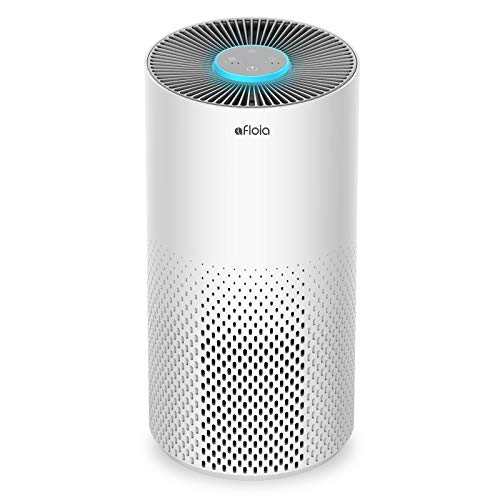
Afloia Air Purifier for Home Bedroom Large Room up to 1500 Sq Ft
- washable pre-filter
$59.97 Check pricePrices change often - Afloia
Afloia Air Purifier for Home Bedroom Large Room up to 1076 Sq Ft
$69.98 Check pricePrices change often - Levoit
Levoit Air Purifier for Home Pets Bedroom Dorm Room, Smart & Voice Control
- carbon stage
$69.99 Check pricePrices change often




Worth knowing before you buy
Common questions
Do all air purifiers with an ionizer produce ozone?
Not necessarily, and this site does not claim a specific product does unless its own listing discloses it. Ionizer and "plasma" technologies are a class that can produce ozone as a by-product depending on design, which is why the safer default is to switch the ionizing mode off and rely on the HEPA and carbon filtration, which produces no ozone regardless of design.
Is a CARB certified device guaranteed ozone free?
CARB certification means the device was tested and found to emit ozone below California’s regulatory limit, not that it emits zero ozone. It is the strongest independent signal a shopper can check for a device sold with an ionizer, UV, or plasma feature, but "below the limit" and "zero" are not the same claim.
Can I still use a machine with an ionizer if I switch the mode off?
Yes. Most machines with an ionizer, plasma, or UV setting let that feature run independently of the fan and filter, so switching it off leaves the HEPA and carbon filtration doing its normal job. The particle removal capability tied to CADR comes from the fan pulling air through the filter media, not from the ionizer.
What is the difference between an ozone generator and an ionizer?
An ozone generator is built specifically to produce ozone gas as its primary function, typically marketed for odor elimination. An ionizer charges particles to make them clump and settle faster, and depending on its design may produce ozone only as an unwanted by-product rather than as its intended output. Both categories deserve the same caution in occupied rooms.
Does activated carbon filtration produce ozone?
No. Activated carbon removes gases and odors through adsorption, a physical process where molecules bind to the carbon’s surface. It involves no chemical reaction that produces ozone, and neither does HEPA filtration, which physically traps particles as air passes through the filter media.
How do I find out if a specific purifier is CARB certified?
CARB publishes a certified indoor air cleaning device list on its own site, searchable by brand and model. Checking the actual model number against that list is more reliable than relying on marketing language like "ozone safe" printed on packaging, which is not the same as CARB certification.