Cooking smoke and odor: why the hood beats the purifier
Quick answer
Cooking, especially frying and searing on a gas or electric stove, is the largest regular indoor particle source in most homes, larger than most people expect. A hood that vents outside removes smoke at the source before it spreads through the room, which beats any portable purifier; where venting is not possible, a sensor-driven unit with a washable pre-filter and carbon, such as the MOOKA 2200 sq ft model at $79.99, is the fallback.

MOOKA Air Purifier for Home Bedroom Large Room 2200 Ft2, HEPA Filter, Grey
Cooking smoke arrives in sudden bursts, and this MOOKA unit’s sensor and auto mode ramp the fan up when a spike hits rather than running at one fixed speed all day. The washable pre-filter catches grease particles before they load onto the true HEPA stage, and the carbon layer handles the odor that HEPA media alone leaves behind.
Coverage claims vary in what air change rate they assume, so check a published airflow figure against your own room rather than the room size on the box.
| Approach | How it removes smoke | Main limitation |
|---|---|---|
| Hood venting outside | Captures smoke and grease at the stove and exhausts it out of the house entirely | Only effective if it is actually vented outside, not recirculating |
| Recirculating hood | Filters and returns air to the room rather than exhausting it | Passes some gases and odor straight through the filter |
| Portable purifier | Filters room air after smoke has already spread away from the stove | Reacts after the fact rather than capturing at the source |
How big of a particle source is cooking, actually?
Frying, searing and any high-heat cooking method release a burst of fine particulate matter directly into the room, and for most households this happens more often and more intensely than any other regular indoor particle source, including cleaning products or occasional candle use. A pan of oil hitting high heat produces a sudden, concentrated spike in airborne particles right at the stove, which then spreads through the kitchen and adjoining rooms if nothing captures or vents it quickly.
This is worth taking seriously specifically because it is routine rather than occasional. A wildfire smoke event or a one-time home renovation is temporary; cooking happens most days in most homes, which makes the cumulative particle exposure from an unvented kitchen add up over time in a way a single dramatic event does not.
Why does an extraction hood beat any portable air purifier for this?
A hood that vents outside captures smoke and grease-laden particles directly above the stove and exhausts them out of the building entirely, before they ever spread into the rest of the kitchen or adjoining rooms. That is removal at the source: the particles never become part of the room’s general air volume in the first place.
A portable purifier, by contrast, can only filter air after smoke has already dispersed away from the stove and mixed into the room, which means it is always working after the fact and can never fully catch up to a fresh, concentrated burst the way source capture does. No purifier CADR, however large, changes this basic sequencing problem.
What if there is no vented hood, only a recirculating one or none at all?
A recirculating hood filters air and returns it to the room rather than exhausting it outside, which helps with visible grease and some odor but passes many of the finer particles and gases straight through. In a rental or older kitchen without real outdoor venting, a portable purifier becomes the realistic fallback, and one with a sensor that detects the sudden spike from cooking and automatically increases fan speed responds much faster than a unit left on a single fixed setting.
Opening a window near the kitchen or running a bathroom exhaust fan nearby during cooking, even without a dedicated range hood, adds real dilution and should not be skipped just because a purifier is also running.
Why does a washable pre-filter matter specifically for cooking smoke?
Cooking produces grease-laden particles that are stickier and heavier than typical household dust, and they build up on a filter surface faster than dry particulate does. A washable pre-filter catches that grease load before it reaches the true HEPA stage, which keeps the fine filter from clogging prematurely and extends the interval before the more expensive HEPA replacement is due.
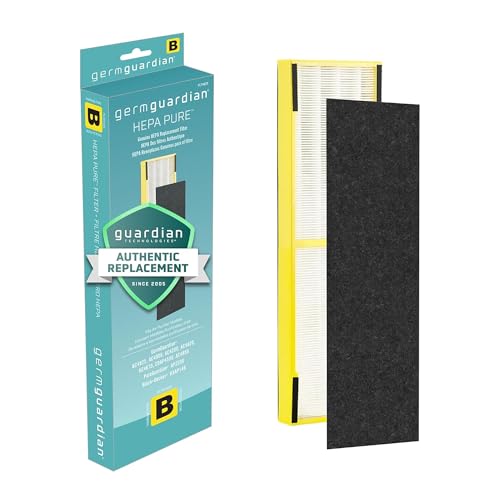
A kitchen-adjacent purifier without a washable pre-filter still works, but its HEPA filter will need replacing sooner than the same unit’s rated interval assumes, since that interval is based on typical household particle load, not the heavier grease load a kitchen adds. A matching replacement filter for this MOOKA model runs about $17.98, worth factoring in as a recurring kitchen cost rather than a one-time purchase.
Does carbon filtration matter as much as HEPA for cooking odor?
Cooking odor comes from volatile compounds released alongside the particulate matter, and true HEPA media does not adsorb gases at all, so odor control depends entirely on whether the unit has a real activated carbon stage. A purifier with strong HEPA performance but no meaningful carbon will keep the particle count down while the cooking smell lingers, which is a common mismatch between what a unit is good at and what a kitchen actually needs.
Equipment mentioned on this page
- Borgodf
Borgodf B-D02L/M05 Replacement Filter for MOOKA B-D02L & M05 Air Purifier
- HEPA claimed
- carbon stage
$17.98 Check pricePrices change often - Sinnya
12020 11020 HEPA Replacement Filter for Clorox Air Purifier 11020 & 11021
- HEPA claimed
$19.66 Check pricePrices change often - Cabiclean
Blue Pure Replacement Filter for Blueair 411, 411+, 411 Auto Air Purifier
- carbon stage
$19.89 Check pricePrices change often - Clorox
Clorox Tabletop Air Purifier True HEPA Replacement Filter, 200 Sq. Ft.
- HEPA claimed
$19.99 Check pricePrices change often - Borgodf
2 Pack HP102 Replacement Filter Compatible with Shark HP102 Air Purifier
- HEPA claimed
- carbon stage
$21.37 Check pricePrices change often




Common questions
Does an electric stove produce less cooking smoke than gas?
Combustion byproducts differ between gas and electric cooking, but the particulate matter released from the food itself, especially frying and searing at high heat, happens on both. Switching cooking method changes one part of the picture but does not eliminate the particle load from the cooking process itself, which is why source capture through venting matters regardless of stove type.
Is a recirculating hood worth installing if venting outside is not possible?
It is better than nothing, since it captures some grease and larger particles before they spread, but it filters and returns air to the room rather than removing it, so finer particles and gases pass through more easily than they would with true outdoor venting. Combining a recirculating hood with a portable purifier and an open window during cooking closes some of that gap.
How quickly does a portable purifier respond to a sudden burst of cooking smoke?
It depends entirely on whether the unit has a particle sensor and auto mode. A unit on a fixed low speed responds slowly to a sudden spike, while a sensor-equipped unit ramps its fan up automatically as soon as the spike is detected, closing the gap between the burst happening and the purifier reacting to it.
Does a purifier near the stove work better than one placed elsewhere in the kitchen?
Closer to the source generally helps a sensor respond faster and lets the unit start pulling in smoke before it disperses fully across the room, though it should not sit so close that grease and heat shorten its lifespan. A unit placed well away from the stove still works, just with a slight delay before it detects and responds to a cooking burst.
Do candles or a gas stove pilot light add meaningfully to indoor particle levels?
Both add some particulate and combustion byproducts, but neither typically matches the concentrated burst produced by active high-heat cooking like frying or searing. They are worth being aware of as smaller, additive sources on top of whatever else is happening in the room, while the cooking process itself remains the larger and more frequent contributor to indoor particle levels in most homes.
How often should a washable pre-filter be cleaned in a kitchen-adjacent purifier?
More often than in a bedroom or living room unit, since grease builds up faster than ordinary household dust. Checking it every one to two weeks and rinsing it when it looks visibly coated keeps airflow consistent and protects the true HEPA stage behind it from taking on a grease load it was not designed to handle.