PM2.5 concentration levels, corresponding AQI, and what your monitor reading means
Quick answer
PM2.5 under 12 micrograms per cubic meter is good air. At 35 micrograms (moderate AQI 100), most people notice degraded air quality. At 55 micrograms (unhealthy for sensitive groups), you should run a purifier. Above 150 micrograms, outdoor pollution is severe and windows should be closed.

Frida Baby 3-in-1 Air Purifier, Sound Machine + Nightlight, Auto-Off Timer
A machine that publishes a real airflow figure, so the arithmetic on this page can actually be applied to it.
Coverage claims vary in what air change rate they assume, so check a published airflow figure against your own room rather than the room size on the box.
| PM2.5 (µg/m³) | AQI | Category | Indoor situation | Action |
|---|---|---|---|---|
| 0 to 12 | 0 to 50 | Good | Clean air; no sources active | No action needed |
| 12.1 to 35.4 | 51 to 100 | Moderate | Air quality beginning to degrade | Monitor readings; optional purifier on low |
| 35.5 to 55.4 | 101 to 150 | Unhealthy for Sensitive Groups | Perceptible haze; noticeable degradation | Run purifier on medium; close windows |
| 55.5 to 150.4 | 151 to 200 | Unhealthy | Heavy haze indoors; pollution obvious | Run purifier on high; minimize outdoor time |
| 150.5 to 250.4 | 201 to 300 | Very Unhealthy | Severe indoor pollution; air thick | Keep purifier on high continuously; stay indoors |
| 250.5+ | 301+ | Hazardous | Extreme indoor pollution | Keep indoors; run purifier 24/7; wear mask outside |
What PM2.5 is and why it matters indoors
PM2.5 stands for particulate matter 2.5 micrometers and smaller. These are small particles: dust, smoke, wildfire ash, pollen pieces, bacteria, and other floating material. PM2.5 is measured in micrograms per cubic meter of air.
PM2.5 is used to assess air quality because these small particles penetrate deep into the lungs and damage the alveoli where gas exchange happens. Larger particles like pollen stay in the nose and throat. Smaller particles like viruses are captured by other measurements.
An air quality monitor shows real-time PM2.5 concentration indoors. This reading changes as windows open or close, as pollution sources become active (cooking, smoking), or as the purifier runs.
Where indoor PM2.5 comes from
- Outdoor infiltration: wildfire smoke, urban pollution, pollen, dust
- Indoor sources: cooking, smoking, combustion appliances, vacuuming, candles
- Resuspension: dust settling on floors and being disturbed by movement
Good air: 0 to 12 micrograms
PM2.5 below 12 micrograms per cubic meter is clean, healthy air. This is typical in homes that are closed to outdoor pollution and have no active indoor sources.
In a closed home on a low-pollution day (no wildfires, low outdoor AQI), indoor PM2.5 usually stays below 12 micrograms. You do not need to run a purifier.
Moderate air: 12 to 35 micrograms
At 12 to 35 micrograms, air is transitioning from clean to degraded. People without respiratory sensitivity notice little, but the concentration is climbing.
This level happens when outdoor pollution is moderate (AQI 51 to 100), or when an indoor source is active (cooking, smoking). If the monitor shows 20 micrograms and climbing, it is time to close windows and consider running a purifier.
Unhealthy for Sensitive Groups: 35 to 55 micrograms
At 35 to 55 micrograms, air quality is visibly degraded. If you look across a room, you might see a slight haze. Most people without respiratory issues feel fine, but people with asthma, allergies, or heart disease start to feel symptoms.
This is when you should run a purifier on medium speed. If you can smell pollution (cooking smoke, wildfire smoke), run on high. Keep windows and doors closed to prevent outdoor pollution from entering.
Unhealthy: 55 to 150 micrograms
At 55 to 150 micrograms, indoor haze is obvious. The air looks gray or yellow-tinted depending on the pollution source (wildfire smoke is orange-yellow).
At this level, everyone should stay indoors if possible, and run the purifier on high continuously. Children, older adults, and anyone with respiratory or heart disease are at high risk.
Very Unhealthy and Hazardous: above 150 micrograms
Above 150 micrograms, air is extremely polluted. This happens during severe wildfires, in industrial zones, or in rare pollution events in major cities.
Keep windows and doors closed. Run the purifier on high 24/7. If you must go outside, wear an N95 or P100 mask. Minimize exertion because exercise increases breathing rate and particle exposure.
Indoor vs. outdoor PM2.5 readings
Outdoor PM2.5 is measured by air quality monitoring networks and published as AQI data. Indoor PM2.5 is what your home monitor shows, which is usually lower than outdoor levels if windows are closed.
In a typical home with closed windows, indoor PM2.5 reaches 50 to 70 percent of outdoor PM2.5 within a few hours due to infiltration through doors, air vents, and window frames.
If windows are open, indoor PM2.5 quickly matches outdoor levels. This is why closing windows when outdoor AQI is unhealthy is the first line of defense.
Equipment mentioned on this page
- GoveeLife
GoveeLife Smart Air Quality Monitor with PM2.5 H5106, LED Display Wired
- app or voice
$45.99 Check pricePrices change often - Clorox
Clorox Small Room Air Purifiers for Bedroom Home, True HEPA Filter
- HEPA claimed
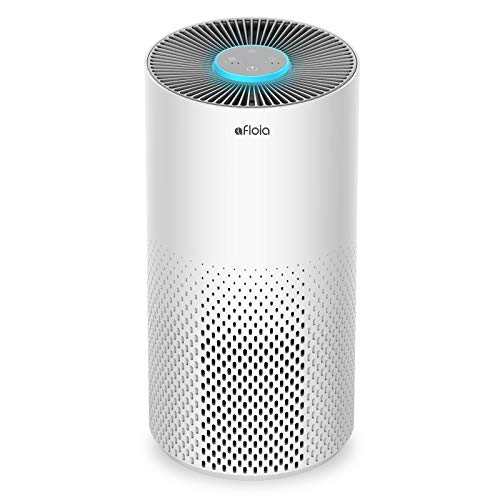
$59.95 Check pricePrices change often - Afloia
Afloia Air Purifier for Home Bedroom Large Room up to 1500 Sq Ft
- washable pre-filter
$59.97 Check pricePrices change often - Afloia
Afloia Air Purifier for Home Bedroom Large Room up to 1076 Sq Ft
$69.98 Check pricePrices change often




Common questions
My monitor shows 18 micrograms. Is that good?
Yes. At 18 micrograms, air is moderate to good, in the range where most people feel fine. You do not need to run a purifier unless you have respiratory sensitivity. If the reading is climbing and you can smell pollution, start the purifier to prevent it from reaching unhealthy levels.
How fast does PM2.5 drop when the purifier runs?
It depends on the CADR and air change rate. At 4.5 air changes per hour, 90 percent of airborne PM2.5 is removed in about 31 minutes. In real homes with imperfect mixing, it takes 45 to 60 minutes. Starting the purifier early is better than waiting for PM2.5 to build up.
Can I see PM2.5?
Not directly, but you can see haze when PM2.5 is high. Visible haze usually means PM2.5 is above 50 micrograms. The haze is the PM2.5 particles scattering light. Smoke, wildfire ash, and dust all contribute to haze.
Why does my indoor PM2.5 spike when I vacuum?
Vacuuming stirs up settled dust from floors, which resuspends into the air. This is a temporary spike: once vacuuming stops, the dust settles again and PM2.5 drops within a few minutes. Some people run a purifier while vacuuming to catch the resuspended dust.
Is PM2.5 the same as dust?
No. PM2.5 is a measurement of particle size and concentration. Dust is a type of particle that contributes to PM2.5, but PM2.5 also includes smoke, pollen pieces, bacteria, and other matter. A PM2.5 reading tells you the total concentration of particles 2.5 microns and smaller.