Best air purifiers for pet dander and odor
Quick answer
A washable pre-filter matters more than a "pet" label: it catches hair before it reaches the HEPA stage, and the LEVOIT Vital 200S-P (B0CGV8FLNX, $199.99) pairs one with a matching pet-specific replacement filter.
Hair is a housekeeping problem a purifier will not solve. Dander, which is microscopic and stays airborne, is the part filtration actually addresses.

LEVOIT Air Purifiers for Home Large Room Up to 1875 Ft2 with Washable Pre-Filter, AHAM VERIFIDE, Air Quality Monitor, HEPA Sleep Mode for Allergies, Pet Hair in Bedroom, Vital 200S-P, Black
The LEVOIT Vital 200S-P has a washable pre-filter ahead of its true HEPA stage, so fur and coarse debris get trapped and rinsed out instead of packing into the filter media. A matching pet-specific replacement filter (B0BJV6D64J, $59.99) is sold for it.
Coverage claims vary in what air change rate they assume, so check a machine's published airflow against your own room rather than the room size on the box.
The three tiers
Beginner: Best for one bedroom and one pet
Who it is for: a single bedroom with one cat or a small dog
- Beginner pick
LEVOIT Air Purifier for Home Pets Bedroom Dorm Room Washable Pre-Filter
- carbon stage
- washable pre-filter
- auto mode
$119.97 Check pricePrices change often
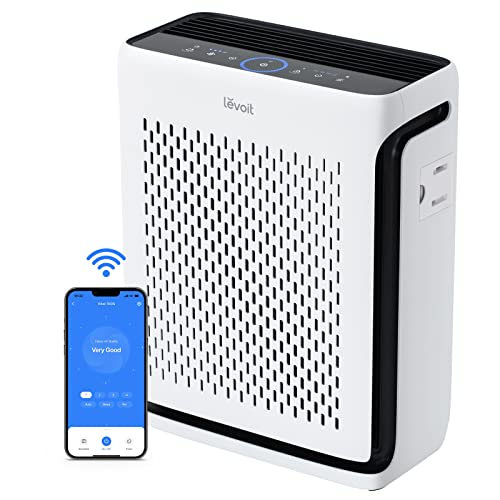
The LEVOIT washable pre-filter unit (B0BNDM2RNG, $119.97) is built around the same idea at a smaller scale and lower price, with a carbon stage for litter box or bedding odor and a coverage claim of 222 square feet.
Not for: a household with more than one shedding pet or an open living space
Intermediate: Best for a living room with a dog
Who it is for: a living room or open area with a dog that sheds year-round
- Intermediate pick
- HEPA claimed
- carbon stage
- washable pre-filter
- auto mode
$99.99 Check pricePrices change often

This 2,500 square foot pet purifier (B0DSC36LB6, $99.99) uses a double-sided HEPA intake with a washable layer on both faces, doubling the surface area that catches hair before the H13 HEPA media has to work.
Not for: anyone who wants a manufacturer-branded replacement filter readily available
Expert: Best for a multi-pet household
Who it is for: a household with more than one pet or heavier shedding across a larger room
- Expert pick
MOOKA Air Purifier for Home Bedroom Large Room 2200 Ft2, HEPA Filter, Grey
- HEPA claimed
- carbon stage
- washable pre-filter
- particle sensor
- auto mode
- has a UV lamp
$79.99 Check pricePrices change often

This 2,200 square foot MOOKA unit (B0D12JQXPR, $79.99) combines a washable pre-filter, true HEPA and carbon in one machine, with a sensor and auto mode to keep up with variable shedding. It has a switchable UV mode; leave it off and let the filtration do the work.
Not for: anyone who does not want to manage an extra mode switch
| Tier | Pre-filter type | Best fit |
|---|---|---|
| Beginner (B0BNDM2RNG) | Washable pre-filter | One bedroom, one pet |
| Intermediate (B0DSC36LB6) | Double-sided washable HEPA | Living room, one shedding dog |
| Expert (B0D12JQXPR) | Washable pre-filter + sensor | Multi-pet household |
| Top pick (B0CGV8FLNX) | Washable pre-filter + matched filter | Whole room, ongoing use |
Is pet hair actually the problem a purifier needs to solve?
Not directly. Hair is large, heavy, and falls out of the air within seconds; it is a vacuuming and grooming problem, not an air filtration one. What stays airborne is dander, microscopic flakes of skin that pets shed constantly and that are light enough to remain suspended in a room’s air for hours, long after the visible hair has already settled onto the floor.
A true HEPA filter captures dander the same way it captures any other fine particulate, by mechanical interception as air passes through the media. The purifier is not distinguishing "pet particles" from any other kind; it is removing a named particle size from the air, which is what the filtration is actually doing rather than anything marketed as pet-specific magic. A "pet" label on a purifier is often describing the pre-filter and carbon stage design covered below, not a different or superior kind of HEPA filtration.
Why does the pre-filter matter more than the HEPA rating for pet households?
A washable pre-filter sits in front of the true HEPA stage and catches hair, fur clumps and coarse debris before they reach it. Without one, that material packs into the HEPA media itself, and a filter rated for a year of use in a pet-free home can clog in as little as eight weeks in a household with a shedding cat or dog.
Once a HEPA filter clogs, airflow drops and the unit either works harder for less clean air or a sensor-equipped model ramps the fan to compensate, adding noise. A washable pre-filter is a five-minute rinse job that resets that clogging clock, which is why every product recommended on this page has one. Skipping that rinse for a month or more in a heavy-shedding household defeats the purpose of having a washable stage at all, since the pre-filter itself can clog and start pushing hair through to the HEPA media anyway.
How often does a filter actually need replacing in a pet home?
Without a washable pre-filter, expect a HEPA filter in a home with one shedding pet to need replacement well ahead of the manufacturer’s general estimate, sometimes in two to three months instead of six to twelve. With a washable pre-filter rinsed every one to two weeks, the HEPA stage behind it lasts closer to its rated life because it is only handling the fine particulate it was designed for.
Replacement filters are a recurring cost worth planning for. The LEVOIT Vital 200S-P’s matching pet-specific filter (B0BJV6D64J) runs $59.99, and budgeting for that swap on a schedule is cheaper over a year than replacing a clogged, non-washable all-in-one filter more often than intended. Setting a recurring reminder tied to the manufacturer’s stated interval, rather than waiting for a visible drop in airflow or a rise in noise, keeps the cost predictable instead of a surprise purchase.
Does a carbon stage help with pet odor, and is that a health claim?
A carbon stage adsorbs odor-causing compounds from litter boxes, bedding and general pet smell, which is a separate function from particulate removal. Saying a carbon filter reduces measured odor compounds in the air is an honest description of what activated carbon does; it is not a claim about anyone’s allergies or breathing improving, and this page does not make that claim. The two stages, mechanical capture for dander and adsorption for odor, are genuinely different processes running in the same housing.
Every tier and the top pick on this page pairs a washable pre-filter with a carbon stage, so hair gets trapped mechanically while odor compounds get adsorbed chemically. Neither stage does the other’s job, and a unit missing one of the two is only solving half the household’s actual problem, which is worth checking for specifically before assuming any purifier with a "pet" label covers both.
Should a multi-pet household size up or run two purifiers?
A single larger unit, like the 2,200 square foot MOOKA pick in the Expert tier, is usually simpler to maintain than two smaller machines, since there is one pre-filter to rinse and one HEPA stage to replace on a schedule. It also concentrates the sensor and auto mode logic in one place rather than having two units react independently to the same room, which matters in a household where multiple pets are moving through the space at different times of day.
Two smaller units make more sense when a home has genuinely separate spaces, such as a main living area and a bedroom where a pet sleeps, each needing its own coverage. For a single open room with multiple pets, sizing one unit up to the room’s square footage at 4 to 5 air changes an hour, guidance rather than a measured standard, is the more practical route, since a second unit in the same open space mostly duplicates coverage rather than adding to it.
What about a switchable ionizer or UV mode on a pet purifier?
Some pet-marketed purifiers, including the MOOKA unit in the Expert tier here, include a switchable ionizer or UV stage alongside true HEPA and carbon. These modes are not needed for dander or odor removal and, in the case of ionizer or plasma technologies, can produce ozone as a by-product, which is harmful in occupied rooms.
Leave any such mode switched off and let the washable pre-filter, HEPA stage and carbon do the actual work. None of the recommendations on this page depend on an ionizer or UV mode being active to perform as described.
Does a purifier need to run continuously, and where should it sit in a pet household?
Dander generation from a pet does not stop overnight, and neither does the shedding that feeds a washable pre-filter. Running a unit continuously, rather than switching it on only when someone notices pet smell or visible hair buildup, keeps the airborne dander concentration lower on average instead of letting it climb between sessions.
A sensor-equipped unit with auto mode, like the Expert tier pick on this page, handles this well by dropping to a quieter, lower-power setting when the room is calm and ramping up automatically when a pet’s activity kicks up dust and dander. A basic unit without a sensor still benefits from running continuously; it just does so at one fixed speed rather than adjusting to the room in real time.
General purifier placement guidance, covered on this site’s placement guide, applies here too: away from walls and furniture that block airflow, and central to the room rather than tucked into a corner. In a pet household, it is also worth placing the unit near where a pet spends the most time, a bed, a favorite chair or a litter box area, since that is where dander and odor concentration is highest and where the washable pre-filter will pick up the most hair.
Placing a unit directly next to a litter box gives the carbon stage the best chance at the strongest odor source in the room, though it also means the washable pre-filter will need more frequent rinsing in that spot compared to a more central placement away from a specific odor source.
How we chose
Products here were researched from published manufacturer specifications and owner reports on retail listings, not from in-person testing with pets in this household or any other.
The filter criteria were a washable pre-filter ahead of true HEPA media, a carbon stage for odor, and, where the catalog showed a matching replacement filter for a specific unit, a real recurring cost the reader can plan around.
Buying tips
Do I need a purifier marketed specifically "for pets"?
Not necessarily. What matters is a washable pre-filter ahead of true HEPA media and a carbon stage for odor; several general-purpose purifiers meet that spec without a pet label, and several pet-labeled ones skip the washable pre-filter entirely.
How often should the washable pre-filter actually be rinsed?
Every one to two weeks in a home with a shedding pet is a reasonable interval, more often during heavy shedding seasons. A pre-filter visibly matted with hair is already past due.
Is a bigger coverage number always better for pet households?
Only if the unit also has the washable pre-filter and carbon stage this page emphasizes. A larger machine without those two features still clogs and still leaves odor untouched, just on a bigger scale.
Other options worth knowing about
- MOOKA
MOOKA H13 HEPA Air Purifier for Home Pet Large Room Up to 1300ft2, Black
- HEPA claimed
- carbon stage
- has a UV lamp
$46.98 Check pricePrices change often - MOOKA
MOOKA Air Purifiers for Home Room up to 1076ft2, True HEPA Filter, B-D02L
- HEPA claimed
- carbon stage
$49.99 Check pricePrices change often - MOOKA
MOOKA Air Purifiers for Home Room up to 1076ft2, True HEPA Filter, B-D02L
- HEPA claimed
- carbon stage
$49.99 Check pricePrices change often - Clorox
Clorox Small Room Air Purifiers for Bedroom Home, True HEPA Filter
- HEPA claimed
$59.95 Check pricePrices change often - Afloia
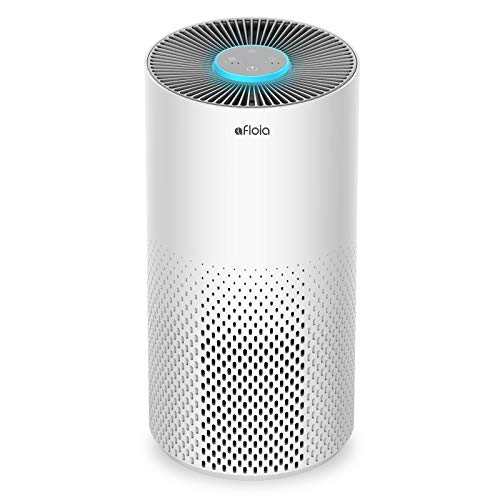
Afloia Air Purifier for Home Bedroom Large Room up to 1500 Sq Ft
- washable pre-filter
$59.97 Check pricePrices change often


Common questions
Does a pet air purifier need a HEPA rating higher than a normal one?
No. True HEPA media captures dander at the same efficiency it captures any other fine particulate; there is no separate "pet HEPA" standard. What differs in a genuinely pet-suited purifier is a washable pre-filter ahead of the HEPA stage and usually a carbon stage for odor, not a higher HEPA rating.
Will an air purifier remove pet hair from a room?
Not meaningfully. Hair is heavy enough that it settles out of the air within seconds rather than staying airborne, so it ends up on floors and furniture instead of passing through a purifier. What purifiers do remove is pet dander, the microscopic skin flakes that do stay suspended in the air for hours.
How fast does a HEPA filter clog in a home with a shedding pet?
Considerably faster than the manufacturer’s general estimate, sometimes within eight weeks with one shedding cat or dog if there is no pre-filter catching hair first. A washable pre-filter rinsed every one to two weeks extends the HEPA stage closer to its normal rated life by keeping coarse debris out of it.
Does activated carbon actually reduce pet odor, or is that a marketing claim?
Activated carbon adsorbs odor-causing volatile compounds from the air, which is a real chemical process, not a marketing claim. It reduces measured odor compound concentration in the air; it does not treat any allergy or breathing condition, and no purifier recommended here is described as doing so, since that would go beyond what filtration actually measures or does.
Is an ionizer mode helpful for pet dander or odor?
It is not needed and is better left off. Ionizer and some plasma technologies can produce ozone as a by-product, which is harmful in occupied rooms. True HEPA filtration and a carbon stage handle dander and odor without that tradeoff, and every pick on this page relies on those two stages rather than an ionizer.
Should a multi-pet household buy one large purifier or several smaller ones?
One larger unit sized to the room’s square footage is usually simpler to maintain, with a single pre-filter to rinse and one HEPA stage to replace on schedule. Multiple smaller units make more sense across genuinely separate rooms, such as a living area and a bedroom, rather than as a way to cover one open room.