Best humidifiers for dry indoor air
Quick answer
An evaporative humidifier like the Vornado Evap40 (B00O0WOO74, $109.99, 4 gallon capacity) self-limits as room air saturates, which avoids the window condensation that ultrasonic units can cause in cold weather.
Indoor relative humidity belongs between 30 and 50 percent; pushing higher in cold weather risks condensation on windows.
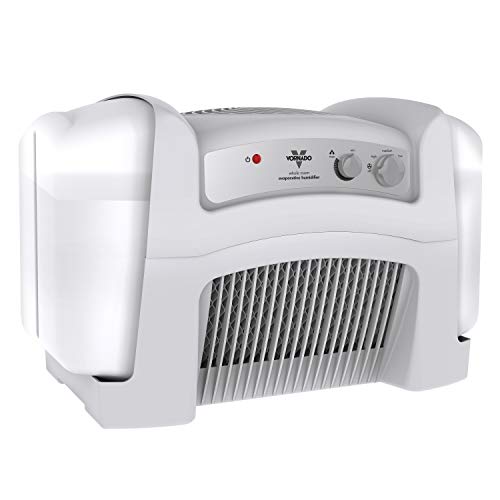
Vornado Evap40 Evaporative Humidifier, 4-Gal Capacity, 1,000 Sq Ft Coverage
The Vornado Evap40 is an evaporative humidifier with a 4 gallon capacity and a 1,000 square foot claim. Evaporative output naturally tapers off as the surrounding air approaches saturation, which is the built-in ceiling that keeps it from overshooting into condensation territory.
Coverage claims vary in what air change rate they assume, so check a machine's published airflow against your own room rather than the room size on the box.
The three tiers
Beginner: Best for one dry bedroom
Who it is for: a single bedroom with dry air in cold weather
- Beginner pick
Levoit Humidifiers for Bedroom 4.2L Top Fill for Large Room, NeoClassic 450
$42.49 Check pricePrices change often
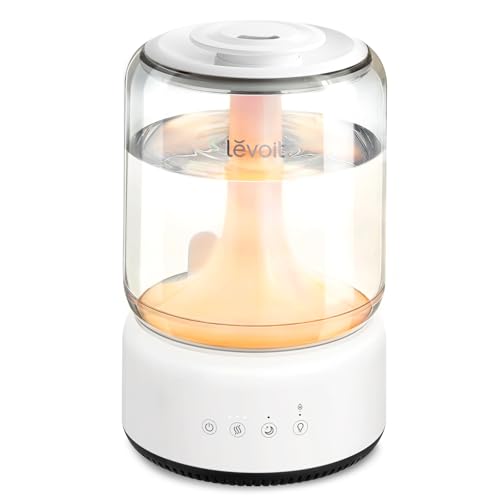
The Levoit NeoClassic 450 (B0GPWP16GL, $42.49) has a 4.2 liter top-fill tank, about 1.1 gallons, and a 432 square foot claim, enough output for one bedroom overnight without needing a refill.
Not for: a living room or an open floor plan
Intermediate: Best for a living room or open area
Who it is for: a living room or open-plan space that dries out noticeably in cold weather
- Intermediate pick
DREO 8L Smart Humidifier Large Room, 80H Runtime, Warm & Cool Mist, HM717S
- auto mode
- app or voice
$99.95 Check pricePrices change often

The DREO 8 liter smart humidifier (B0DT48R3BR, $99.95), about 2.1 gallons, claims 80 hours of runtime and a 600 square foot coverage, with wifi and auto mode to hold a target humidity rather than running at full output continuously.
Not for: a whole house or multiple rooms from a single unit
Expert: Best for whole-house dry air in cold climates
Who it is for: a whole house or a large connected area in a cold, dry climate
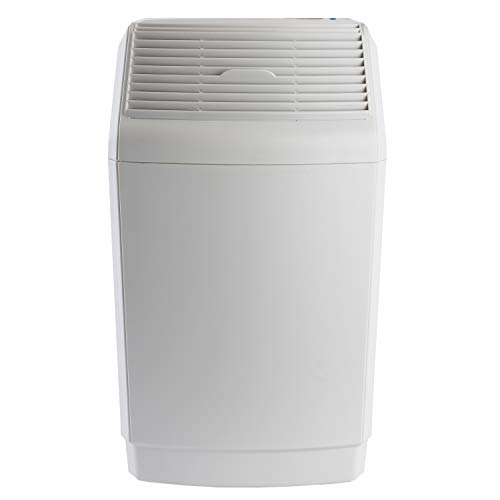
The AIRCARE Space Saver evaporative humidifier (B00WAC9VKQ, $149.99) holds 6 gallons and claims 2,700 square feet. As an evaporative design, its output tapers as the surrounding air saturates, which matters at whole-house scale where a runaway ultrasonic unit could fog windows across several rooms at once.
Not for: a single small room, where it is oversized and more expensive than necessary
| Tier | Tank size | Coverage claim |
|---|---|---|
| Beginner (B0GPWP16GL) | 4.2 L (~1.1 gal) | 432 sq ft |
| Intermediate (B0DT48R3BR) | 8 L (~2.1 gal) | 600 sq ft |
| Expert (B00WAC9VKQ) | 6 gal | 2,700 sq ft |
| Top pick (B00O0WOO74) | 4 gal | 1,000 sq ft |
How does tank size relate to actual humidifying output?
A tank measured in liters or gallons tells a shopper how long a unit runs between refills, not directly how much moisture it adds to the air per day; that depends on the unit’s output rate and how long it runs, two figures that are usually printed separately on a listing rather than combined into one number. The DREO 8 liter unit in the Intermediate tier, for example, converts to roughly 2.1 gallons and claims an 80 hour runtime, which works out to a modest continuous output spread across more than three days rather than a burst of humidity all at once.
Matching that output against a room’s volume, not just its floor area, is what determines whether a humidifier keeps up. A larger room with higher ceilings holds more air volume for the same floor space, and a tank-and-output combination sized for a small bedroom will fall short in an open-plan living area even if the floor area looks similar on paper, since the extra ceiling height adds air volume the floor plan alone does not show.
What is the condensation ceiling in cold weather, and why does it matter?
Indoor relative humidity belongs between 30 and 50 percent. In cold weather, a window is one of the coldest surfaces in a room, and once the air near that surface cools below its dew point, moisture condenses on the glass regardless of what the humidity reading is in the middle of the room. Pushing indoor humidity higher in an attempt to feel more comfortable raises the dew point and makes that window condensation more likely, not less, and the same logic applies to any other cold surface in the room, not just window glass.
This is the practical ceiling on how much humidity to add during cold weather, separate from any comfort preference. A humidifier that keeps adding moisture past the point where a room’s coldest surfaces start condensing is working against the room’s own building envelope rather than improving it, and the visible fog on a window is a direct sign that ceiling has already been crossed.
Why does an evaporative design self-limit output better than an ultrasonic one?
An ultrasonic humidifier vibrates water into a fine mist and pushes it into the air regardless of how much moisture the air can actually hold, which means it keeps adding output at full rate even as a room approaches or exceeds the comfortable 30 to 50 percent range unless a humidity sensor and auto-shutoff step in to slow it down. An evaporative humidifier instead draws air across a wet wick or filter, and evaporation naturally slows as the surrounding air approaches saturation, tapering output on its own.
This is why both the top pick and the Expert tier recommendation on this page use an evaporative design rather than ultrasonic. In a cold-weather household specifically worried about overshooting into condensation, the evaporative approach has a built-in ceiling that an unmonitored ultrasonic unit simply does not have.
Does a humidity sensor and auto mode solve the same problem for an ultrasonic unit?
It helps significantly. The DREO units on this page include a humidity sensor and auto mode, which cycles output to hold a target level rather than running continuously at maximum, closing much of the gap with an evaporative design’s natural self-limiting. Without that sensor, a basic ultrasonic humidifier has no way to know it has already reached a comfortable humidity level and will keep adding moisture past it.
A sensor-equipped ultrasonic unit and a basic evaporative unit both address the overshoot problem, just through different mechanisms, one through electronic feedback and one through the physics of evaporation itself. A basic ultrasonic humidifier without a sensor is the combination most likely to overshoot into condensation territory during cold weather.
How many gallons per day does a room actually need?
There is no single published figure that applies to every room, since the right output depends on the room’s volume, how dry the outside air is, how tightly sealed the building envelope is, and the target humidity level within the 30 to 50 percent range this page uses throughout. A small bedroom in a moderately dry climate might be comfortable with well under a gallon of daily output, while a large open-plan area in a very dry, cold climate can need several gallons a day to hold the same target.
This site’s humidifier calculator works through that sizing by room volume rather than a flat per-square-foot rule. Reading a unit’s tank size and claimed runtime together, as this page does for each pick, gives a rough daily output figure to compare against that sizing before buying.
Does a bigger console humidifier need less refilling attention than a small one?
Proportionally, yes: the 6 gallon AIRCARE Space Saver in the Expert tier needs refilling far less often relative to its output than the 4.2 liter bedroom unit in the Beginner tier, simply because it holds more water to start with. In a whole-house setup during a sustained cold, dry stretch, that translates to refilling every few days instead of daily.
The tradeoff is upfront cost and physical size: a console-style evaporative humidifier is a larger piece of furniture-scale equipment compared to a compact bedroom unit, which is why this page recommends it specifically for whole-house or multi-room coverage rather than a single bedroom.
Does a humidifier need cleaning, and does hard water affect its output?
Standing water in a tank, especially in an ultrasonic unit that does not heat the water before dispersing it, can grow bacteria or mineral scale if left unchanged for more than a couple of days, which reduces output efficiency and can affect air quality in the room the unit is meant to help. Regular tank cleaning, typically weekly during heavy use, keeps a humidifier performing at the output level its specifications describe rather than gradually underperforming as scale builds up.
An evaporative humidifier’s wick or filter also needs periodic replacement, since mineral buildup on the wick reduces the surface area available for evaporation over time, quietly lowering output even though the unit still runs and the tank still empties on schedule. This is a maintenance cost worth factoring in alongside the unit’s purchase price, similar to the recurring filter costs covered on purifier pages elsewhere on this site.
Hard water, with a higher mineral content, accelerates the scale buildup covered above and, in an ultrasonic unit specifically, can disperse fine mineral dust into the room along with the moisture, sometimes visible as a white residue on nearby surfaces. Distilled or demineralized water reduces this effect substantially and is worth the extra step in a hard water area, particularly for the ultrasonic units in the Beginner and Intermediate tiers on this page.
An evaporative humidifier is somewhat less prone to dispersing mineral dust into the air, since the wick traps much of the mineral content rather than aerosolizing it the way an ultrasonic transducer can, though the wick itself will still need replacing sooner in a hard water area regardless of humidifier type.
How we chose
Every humidifier on this page was researched from published manufacturer specifications, including tank size, claimed runtime and coverage, and owner reports on retail listings, not from in-person testing of humidity output.
Selection prioritized matching output claims to a realistic range of rooms, from a single bedroom up to whole-house coverage, and favored evaporative designs or sensor-equipped ultrasonic units where cold-weather condensation risk was the deciding factor.
Buying tips
Should I buy the humidifier with the largest tank I can find?
Only if the room it is going in actually needs that much output. A tank sized well beyond a room’s volume just means longer intervals between refills, not a better result, and in cold weather an oversized ultrasonic unit without a sensor raises the risk of overshooting into condensation.
Is an evaporative humidifier better than an ultrasonic one for dry winter air?
For cold-weather use where condensation on windows is a concern, an evaporative design’s self-limiting output is an advantage. For a smaller room where a sensor-equipped ultrasonic unit can hold a target humidity electronically, either approach works.
How do I convert a liter tank size to gallons to compare units?
Divide the liter figure by about 3.785 to get gallons. An 8 liter tank is roughly 2.1 gallons, which is the conversion used to compare the metric and imperial tank sizes across the picks on this page.
Other options worth knowing about
- Levoit
Levoit Top Fill Humidifiers for Bedroom, 2.5L Tank for Large Room, 25dB
$29.79 Check pricePrices change often - DREO
DREO 3L Humidifiers for Bedroom, 30H Runtime, 26 dB Quiet, New Edition
$29.91 Check pricePrices change often - Levoit
Levoit Humidifiers for Bedroom, Quiet, 3L Cool Mist, Essential Oil Diffuser
$37.49 Check pricePrices change often - Vicks
Vicks Humidifier 3-in-1 SleepyTime Cool Mist Humidifier for Nursery, White
$37.97 Check pricePrices change often - Pure Enrichment
Pure Enrichment PureBaby Ultrasonic Cool Mist Humidifier
$39.99 Check pricePrices change often - Frida
Frida Baby 3-in-1 Cool Mist Humidifier for Large Rooms & Bedroom, Diffuser
$43.49 Check pricePrices change often


Common questions
What humidity level should a room be kept at in cold weather?
Indoor relative humidity should stay between 30 and 50 percent year-round, including cold weather. Pushing higher than that range in cold weather raises the risk of condensation forming on windows and other cold surfaces, since those surfaces cool below the air’s dew point well before the middle of the room does.
Why does my window fog up when I run a humidifier in cold weather?
A window is typically the coldest surface in a room during cold weather, and once air near that surface cools below its dew point, moisture condenses on the glass regardless of the humidity reading elsewhere in the room. Running a humidifier at a level that pushes room humidity toward or above 50 percent makes that condensation more likely.
Is an evaporative humidifier better than an ultrasonic one?
For cold-weather use, an evaporative humidifier’s output naturally tapers as the surrounding air approaches saturation, which limits the risk of overshooting into window condensation. An ultrasonic humidifier keeps adding moisture at a steady rate regardless of the air’s saturation unless it has a humidity sensor and auto-shutoff, so a sensor-equipped ultrasonic unit closes most of that gap.
How do I convert a humidifier’s liter tank size to gallons per day?
Divide the tank’s liter capacity by about 3.785 to get gallons, then divide by the manufacturer’s claimed runtime in days to estimate daily output. An 8 liter tank claiming an 80 hour runtime works out to roughly 2.1 gallons spread across a bit more than three days, not 2.1 gallons per day.
Does a bigger coverage claim in square feet mean a humidifier works for any room that size?
It is a rough guide rather than a guarantee, since actual performance depends on room volume, not just floor area, along with how dry and how tightly sealed the space is. A tall or drafty room of the claimed square footage may need more output than the same floor area in a smaller, well-sealed room.
How often does a humidifier tank need refilling?
It depends on tank size and output rate together. A small bedroom unit with a 4.2 liter tank typically needs daily refilling during heavy use, while a 6 gallon console-style unit can run several days between refills at a similar relative output, since it starts with a much larger reservoir.