Best air purifier for a basement
Quick answer
A basement needs humidity control before filtration: the Midea 50 Pint dehumidifier with pump ($229.99), rated to 4,500 sq ft, should run first to bring relative humidity under 60 percent, and only after that does adding a purifier make sense.
Running a purifier in a damp basement without fixing humidity first treats the wrong problem; mold and musty odor keep regenerating faster than any filter can clear them.

Midea 50 Pint Dehumidifier with Pump, 4,500 Sq. Ft, Energy star
It is rated to 4,500 sq ft with a continuous drain pump, meaning it does not need to be emptied by hand every day in a basement that is producing real moisture, which is usually the failure point of smaller manual-drain units.
Coverage claims vary in what air change rate they assume, so check a machine's published airflow against your own room rather than the room size on the box.
The three tiers
Beginner: Best for a smaller, less damp basement
Who it is for: a smaller finished basement, or one that only needs seasonal humidity control rather than year-round

The Waykar 34 Pint (2025 Energy Star, $165.98) is rated to 2,000 sq ft and is a reasonable starting size for a basement that is not consistently producing heavy moisture.
Not for: a basement with standing dampness or a musty smell year-round, which typically needs more capacity and a continuous drain
Intermediate: Best for a mid-size basement that needs continuous drain
Who it is for: a mid-size basement that produces enough moisture that manual tank emptying becomes a daily chore
- Intermediate pick
Midea 50 Pint Dehumidifier with Pump, 4,500 Sq. Ft, Energy star
- app or voice
$229.99 Check pricePrices change often
The Midea 50 Pint with pump ($229.99) is rated to 4,500 sq ft and drains continuously through its pump, which removes the daily emptying problem that undersized manual units run into in an actual basement.
Not for: a small, dry basement where this much capacity and the added pump plumbing are unnecessary
Expert: Best for the largest, wettest basements
Who it is for: a large or consistently wet basement, including one with a history of standing water or a sump pump already installed
- Expert pick
GE Dehumidifier with Pump & Hose, 50 Pint for Basement & Home, 5000 Sq Ft
$293.99 Check pricePrices change often
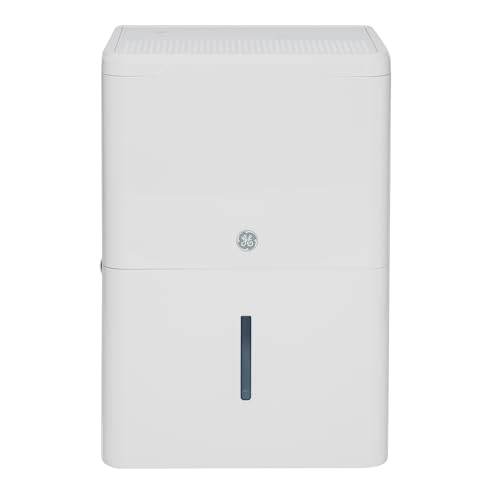
The GE 50 Pint with pump and hose ($293.99) is rated to 5,000 sq ft with continuous drain, giving the largest basements enough capacity to actually hold humidity under 60 percent rather than running constantly at maximum output.
Not for: anyone without a nearby drain or a way to route the hose, since a pump unit is only an advantage if the continuous drain has somewhere to go
| Step | What it does | Why it comes first or second |
|---|---|---|
| 1. Measure humidity | Confirm relative humidity with a hygrometer before buying anything | Guessing leads to an undersized dehumidifier or skipping the step entirely |
| 2. Dehumidify | Run a dehumidifier sized to the space until relative humidity is reliably under 60 percent | Mold and dust mites both thrive above 60 percent, and a filter cannot remove moisture |
| 3. Filter | Add a purifier with a carbon stage for musty odor and airborne particulate | Filtration works on the air that is left once the moisture problem is actually under control |
Why the order of operations matters in a basement specifically
A basement's dominant air quality problem is usually moisture, not particulate, and a purifier does nothing to address relative humidity. Indoor relative humidity above 60 percent actively supports mold growth and dust mites, both of which then generate the exact particulate and musty odor a purifier is being asked to remove, faster than most portable units can filter it out.
Running a purifier before addressing humidity means fighting a source that keeps replenishing itself. Getting relative humidity reliably under 60 percent first, ideally into the 30 to 50 percent range recommended for indoor air generally, removes the source before asking a filter to clean up what is left.
Sizing a basement dehumidifier
Dehumidifier capacity is rated in pints removed per day, and that rating changed with the 2019 DOE test conditions: a physical machine once sold as a 70 pint unit under the old test is now commonly labeled around 50 pints for the same actual moisture removal. Comparing an older chart or an old unit's box rating against a new label's pint number will make a shopper oversize or undersize by mistake.
A basement producing consistent, heavy moisture, whether from grade-level humidity, a nearby water source, or poor ventilation, needs a continuous drain pump rather than a manual tank, since a manual unit that fills up unnoticed simply stops removing moisture until someone empties it.
What "under 60 percent" actually means and where it comes from
Indoor relative humidity belongs between 30 and 50 percent under general indoor air quality guidance; above 60 percent is the threshold where mold and dust mites become significantly more likely to establish themselves, and in cold weather high indoor humidity also condenses on windows and cold surfaces. A basement, being naturally cooler and closer to grade, tends to run higher humidity than the rest of the house even when the rest of the home sits comfortably in range.
A hygrometer, not a guess or a musty smell, is the way to actually know where a specific basement sits before buying a dehumidifier sized for a worse or better problem than the one that exists.
What kind of purifier makes sense once humidity is under control
Once relative humidity is reliably under 60 percent, a purifier with an activated carbon stage, not just true HEPA, addresses the musty odor that lingers in a basement even after active mold growth has stopped, since carbon targets the gases behind that smell rather than particulate alone. A unit like the Cypcat dual-intake purifier ($139.99), with true HEPA and a high-capacity carbon layer rated to 2,500 sq ft at the manufacturer's assumed air change rate, fits that role.
A purifier run in a basement that is still damp will need its filter changed far more often than the manufacturer's stated interval, since a wet filter medium loads up with moisture-related particulate faster than a dry one, which is one more reason the dehumidifier step has to come first.
A dehumidifier does not replace mold remediation
Getting humidity under 60 percent prevents new mold growth and slows existing colonies, but a dehumidifier does not clean up mold that has already established itself on a surface. Visible mold growth on drywall, carpet, or framing is a remediation problem first, addressed separately from both the dehumidifier and the purifier discussed here.
A musty smell with no visible mold is not automatically a false alarm; mold can grow behind drywall or under flooring where it is not visible at all. If the smell persists after several weeks of humidity reliably under 60 percent, that is a reason to inspect further, not a reason to assume the dehumidifier failed.
Filter and drain maintenance in a basement environment
A basement dehumidifier's coils and filter need more frequent cleaning than the same unit would in a drier room, since basements tend to collect more dust and debris at floor level. A continuous drain hose also needs periodic checking for kinks or clogs, since a blocked hose on a pump unit can cause the same overflow problem a full manual tank would.
A dehumidifier placed directly on a concrete floor pulls in more of that floor-level dust than one raised even a few inches, which shortens the interval between filter cleanings. A simple stand or shelf under the unit reduces how often that maintenance is actually needed.
How we chose
These picks are drawn from published manufacturer capacity ratings, the 2019 DOE pint rating change, and owner reports describing pump reliability and drain performance in actual basement use, not in-person testing of our own basement.
Preference went to continuous-drain pump units for the mid and largest tiers, since manual-drain units are a common failure point in a basement that produces real, ongoing moisture rather than occasional dampness.
Buying tips
Do I need a dehumidifier if my basement does not smell musty?
Check with a hygrometer regardless of smell, since relative humidity can sit above 60 percent well before a musty odor becomes noticeable, and mold growth can begin before the smell does too.
Should I buy based on an old pint rating I remember from years ago?
No. The 2019 DOE test conditions changed how pint ratings are calculated, so a machine labeled 50 pints today can remove roughly the same moisture as a 70 pint machine under the old rating; compare only current-generation ratings against each other.
Is a pump dehumidifier worth the extra cost over a manual-drain one?
In a basement with meaningful ongoing moisture, yes, since a full manual tank simply stops removing water until emptied, while a pump drains continuously as long as the hose has somewhere to go.
What order should I actually do this in?
Measure with a hygrometer, run a properly sized dehumidifier until relative humidity is reliably under 60 percent, then add a carbon-equipped purifier for whatever odor and particulate remain.
Other options worth knowing about
- WHOY
WHOY 80 Pint Dehumidifier for Basement, 50 Pint DOE, Drain Hose, 5000 Sq Ft
- washable pre-filter
- app or voice
$159.98 Check pricePrices change often - Midea
Midea 35 Pint Dehumidifier for Basement, 3,000 Sq. Ft, Energy star
- app or voice
$209.99 Check pricePrices change often - VEAGASO
VEAGASO 34-36 Pint/D, 2500 Sq.Ft Dehumidifier for Basement with Drain Hose
- auto mode
$209.99 Check pricePrices change often - Midea
Midea 50 Pint Dehumidifier for Basement, 4,500 Sq. Ft, Energy star
- app or voice
$219.99 Check pricePrices change often - avylo
avylo Dehumidifier for Basement with Pump and Hose, Max 90 Pints/D, White
$224.69 Check pricePrices change often - Frigidaire
Frigidaire 35 Pint Dehumidifier for Home, Bedroom & Medium Rooms, White
- washable pre-filter
$229.00 Check pricePrices change often


Common questions
Should I buy a dehumidifier or an air purifier for my basement first?
A dehumidifier first. A basement's dominant problem is usually moisture, which supports mold and dust mites above 60 percent relative humidity, and neither of those problems responds to filtration. Getting humidity under control removes the source; adding a purifier afterward addresses whatever particulate and odor remain once that source is no longer regenerating faster than a filter can clear it.
What pint rating dehumidifier do I need for a basement?
It depends on square footage and how damp the space actually is; a smaller, less damp basement can start around 30 to 35 pints under current DOE ratings, while a larger or consistently wet basement needs 50 pints or more with a continuous drain pump rather than a manual tank that fills up unnoticed.
Why does my old dehumidifier chart not match current pint ratings?
The DOE changed its test conditions in 2019, so a machine that would have been labeled 70 pints under the old test is commonly labeled around 50 pints today for the same physical moisture removal. Compare only units rated under the same current standard, since mixing an old chart with a new label leads to an oversized or undersized purchase.
What humidity level is actually a problem in a basement?
Relative humidity above 60 percent is the threshold where mold and dust mites become significantly more likely to establish themselves; general indoor guidance targets 30 to 50 percent for comfort and health. A hygrometer, not a guess or a musty smell, is the reliable way to know where a specific basement actually sits.
Does an air purifier remove basement mold?
No. A purifier can capture some airborne mold spores and reduce musty odor with an activated carbon stage, but it does not clean mold already growing on a surface, and it does nothing about the humidity that allowed the mold to establish itself in the first place, which is why the dehumidifier step has to come first.
Do I need a purifier at all once my basement dehumidifier is running?
Not necessarily, if the goal was only humidity control and there is no lingering odor or dust. Adding a carbon-equipped purifier makes sense once humidity is reliably under control and there is still musty odor, dust, or particulate to address, particularly in a basement used as a living or storage space.