Levoit vs Winix vs Blueair
Quick answer
Over five years the Winix 5510 costs about $404.92 in unit plus filters, the Levoit Core 400S-P about $424.89, and the Blueair Blue 211i Max about $1,248.90, because Blueair filter cartridges cost more and are rated for a shorter service life.
Prices are single-unit list prices from current catalog listings and will drift with promotions.

WINIX 5510 Air Purifier (New Generation of 5500-2 with App Support) for Home Large Room Up to 1881 Ft2 in 1 Hr, True HEPA, High Deodorization Carbon Filter and Auto Mode, Captures Pet Allergies, Smoke
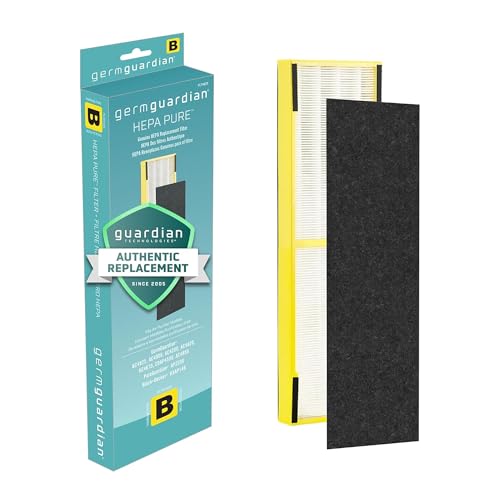
The Winix 5510 pairs a $179.99 unit with a $29.99 filter rated for around 8 months, which comes out lowest of the three on five year cost while still including a particle sensor and auto mode.
Coverage claims vary in what air change rate they assume, so check a published airflow figure against your own room rather than the room size on the box.
| Model | Unit price | Filter price | Filter life | Filters over 5 yrs | 5 yr total |
|---|---|---|---|---|---|
| Levoit Core 400S-P | $189.99 | $46.98 | 12 months | 5 | $424.89 |
| Winix 5510 (5500-2 successor) | $179.99 | $29.99 | 8 months | 7.5 | $404.92 |
| Blueair Blue 211i Max | $349.00 | $89.99 | 6 months | 10 | $1,248.90 |
What each brand actually charges you after the sale
The sticker price on any of these three units is the smallest part of what you spend on it. The Levoit Core 400S-P lists at $189.99 and its matching Core 400S filter runs $46.98 with a 12 month manufacturer interval, so five years of ownership costs about $424.89 including the original unit.
The Winix 5510, sold as the direct successor to the long running 5500-2, lists at $179.99. Its replacement filter costs $29.99 and carries an 8 month interval, which works out to 7.5 filters over five years, or $224.93 in filters plus the unit for a total of $404.92. That is the lowest five year number of the three, even though the Winix was not the cheapest to buy on day one.
The Blueair Blue 211i Max is the outlier. It lists at $349.00, already the most expensive unit here, and its genuine AllergenBlock replacement filter costs $89.99 on a 6 month interval. Ten filter changes over five years adds $899.90, pushing the total to $1,248.90, roughly three times what either Levoit or Winix costs to run for the same period.
Why the coverage numbers on the box are not comparable
Levoit rates the Core 400S-P for 1,733 square feet, Winix rates the 5510 for 1,881 square feet, and Blueair rates the Blue 211i Max for 3,235 square feet. Reading those three numbers side by side makes Blueair look like it moves twice the air of the other two. It probably does not.
A manufacturer coverage claim in square feet means nothing without the air changes per hour it assumes, a figure brands rarely publish next to the headline number. The same physical fan can be labeled for a huge room at a low air change rate or a small room at a high one. Until a brand states its assumed ACH, treat the square footage claim as marketing copy and compare filter cost and CADR instead.
Only Levoit publishes a CADR figure in this set: 231 CFM for the Core 400S-P, tested under the AHAM AC-1 standard in a sealed 1,008 cubic foot chamber. Winix and Blueair do not list a CADR number on these particular listings, which is itself worth noting when you are comparing airflow rather than assuming it.
What each unit is actually built like
The Winix 5510 ships with a particle sensor, an automatic mode that adjusts fan speed to what the sensor reads, and wifi for app control. The catalog listing marks it true HEPA with no ionizer flag set.
The Levoit Core 400S-P is a simpler mechanical design: a fan pulling air through a HEPA and carbon combination filter, sold in a plain version and a smart wifi-enabled version at $239.99. Its listing does not mark the sensor or auto mode flags that the Winix carries.
The Blueair Blue 211i Max uses a different filtration approach than the other two. Its catalog listing marks true HEPA as false: Blueair markets its Blue 211i Max on a mechanical filter combined with an electrostatic charging stage rather than a filter tested to the standard true HEPA definition. That is not automatically worse, but it is a different technology than the Levoit and Winix, and it is the reason its replacement filters are built and priced differently.
When the Levoit or Blueair still make sense
If your total cost of ownership is not the deciding factor, the Levoit Core 400S-P is the one with an actual published CADR number to plan a room around, which matters if you are sizing to a specific square footage using the two thirds rule rather than trusting a brand claim.
The Blueair earns its place if you specifically want its combination of a washable pre-filter stage and its particular electrostatic technology, or if you already own other Blueair filters and do not want to mix ecosystems. Buy it with eyes open about the five year filter bill.
What the AHAM AC-1 test actually reports
AHAM AC-1 does not produce a single CADR number for a purifier; it produces three, one each for smoke, dust and pollen, measured by releasing each particle type into a sealed 1,008 cubic foot chamber and timing how fast the unit clears it. Smoke particles are the smallest of the three, and the smoke CADR for a unit is usually its lowest number, which matters most for anyone buying specifically for wildfire smoke or cigarette smoke rather than general dust and pollen.
The 231 CFM figure listed for the Levoit Core 400S-P in the table above is the CADR value in this catalog listing without a stated particle type attached, so treat it as a general reference point rather than assuming it is specifically the smoke number, which tends to be the more demanding figure for anyone comparing units for a smoke-heavy climate.
Noise and where you actually notice it
The Levoit Core 400S-P listing does not state a decibel figure, and neither do the Winix or Blueair listings compared here. Noise output at the top fan speed is often the difference between a unit you can leave running while you sleep and one you switch off overnight, so if that matters for a bedroom placement, check the specific noise spec on whichever model you are actually considering rather than assuming based on brand reputation.
A unit with a strong CADR number but a loud top speed is often run at a lower, quieter speed in practice, which reduces its real world air changes per hour below what the peak CADR figure suggests. This is one more reason the headline number on any of these three units is a starting point for comparison, not a guarantee of the air changes you will actually get night after night.
How to check your own math before buying
Every one of these totals depends on two catalog numbers you can verify yourself before checkout: the unit price and the filter price, multiplied by how many filters the manufacturer says you need across your ownership window. Run the same math on whatever room-specific model you are actually considering, since coverage tiers within a single brand carry different filters at different prices. A five year window is a reasonable planning horizon for most households, but nothing stops you from running the same formula over a three or ten year window if that better matches how long you expect to own the unit. Keep your own receipt or a simple spreadsheet of actual filter purchases over time, which lets you check your real spending against the manufacturer interval claim used in this comparison, and adjust your own budget expectation if your household loads the filter faster than the stated average.
The formula behind the table above
- Filters needed over 5 years = 60 months divided by the manufacturer filter life in months.
- Five year total = unit price plus (filter price times filters needed).
- Round up, not down: a filter due at month 61 is a filter you are buying in year 5, not skipping.
Equipment mentioned on this page
- Borgodf
Borgodf B-D02L/M05 Replacement Filter for MOOKA B-D02L & M05 Air Purifier
- HEPA claimed
- carbon stage
$17.98 Check pricePrices change often - Sinnya
12020 11020 HEPA Replacement Filter for Clorox Air Purifier 11020 & 11021
- HEPA claimed
$19.66 Check pricePrices change often - Cabiclean
Blue Pure Replacement Filter for Blueair 411, 411+, 411 Auto Air Purifier
- carbon stage
$19.89 Check pricePrices change often - Clorox
Clorox Tabletop Air Purifier True HEPA Replacement Filter, 200 Sq. Ft.
- HEPA claimed
$19.99 Check pricePrices change often - Borgodf
2 Pack HP102 Replacement Filter Compatible with Shark HP102 Air Purifier
- HEPA claimed
- carbon stage
$21.37 Check pricePrices change often




Common questions
Is Winix the same company as Winix 5500-2 and Winix 5510?
Yes. The 5510 in this catalog is sold as the new generation of the 5500-2, with the same 116130 Filter H replacement filter family and the same general size class. If you already own a 5500-2, its filters are interchangeable with the 5510 line, which keeps your running cost the same as what is shown here.
Why is the Blueair filter so much more expensive than Levoit or Winix?
Blueair genuine replacement filters for the Blue 211i Max and 211+ line list at $69.99 to $89.99 depending on the media type, against $23.99 to $49.99 for the Coway, Winix and Levoit filters in this catalog. The AllergenBlock variant used here also carries a shorter stated 6 month life, which compounds the gap over five years.
Does a higher price always mean better filtration?
No. Price reflects brand, filter media cost, and included features like sensors or wifi, not filtration performance on its own. The only standardized comparison point across brands is a published AHAM AC-1 CADR number, and in this specific set only Levoit lists one for the model compared here.
Should I buy based on square footage claims alone?
No. Coverage claims in square feet assume an air changes per hour rate that is rarely published, so a 3,235 square foot claim and a 1,733 square foot claim are not directly comparable unless you know the ACH each brand assumed. Use a CADR calculator against your actual room dimensions instead of comparing box copy.
Do third party filters work in these units and save money?
Aftermarket filters exist for all three brands, often at lower prices than genuine parts. They can reduce your five year cost, but fit and filtration quality vary by seller, and using one may affect a manufacturer warranty. Check the specific listing states compatibility with your exact model number before buying.
How often should I actually replace the filter versus the stated interval?
The stated interval assumes moderate use in an average home. Homes with pets, wildfire smoke exposure, or heavy cooking load a filter faster and may need changes sooner than the manufacturer figure. Watch for reduced airflow or a rising odor as a practical signal, not just the calendar.