Whole-house filter vs a room air purifier
Quick answer
A whole-house filter like the AprilAire 213 ($64.99, MERV 13) only cleans air while the HVAC blower runs, which on most thermostats is a fraction of each hour; a room purifier like the Coway AP-1512HH ($218.50) runs on its own continuous fan, which is why a standalone unit usually wins for point-of-use protection in a bedroom or nursery.
Setting your thermostat fan to "on" instead of "auto" closes most of this gap, at the cost of more electricity and faster filter loading.
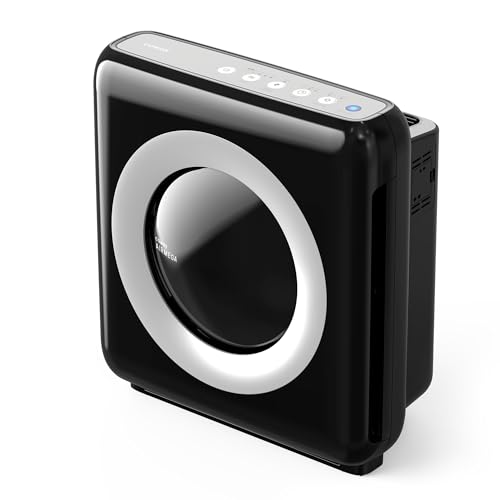
COWAY Air Purifier for Home Up to 1,748ft2, HEPA Filter for Smoke, Allergies, Pet Dander, Odor, Air Quality Monitor, Auto&Eco Mode, Timer, Filter Indicator, 3yr Warranty, Mighty AP-1512HH, Black
The Coway AP-1512HH runs continuously on its own fan regardless of what your thermostat is doing, which matters most in the one room, like a bedroom, where you actually need the air moving while you sleep.
Coverage claims vary in what air change rate they assume, so check a published airflow figure against your own room rather than the room size on the box.
| Whole-house filter (AprilAire 213, MERV 13) | Room purifier (Coway AP-1512HH) | |
|---|---|---|
| Runs when | Only while the HVAC blower is on | Continuously, on its own fan |
| Coverage | Every room the ductwork reaches | The room it sits in, and whatever air mixes into it |
| Price | $64.99 per filter | $218.50 unit plus $23.99 filter |
| Standard used | MERV under ASHRAE 52.2 | CADR under AHAM AC-1 (not stated on this listing) |
| Visible in the room | No, filter sits in the return duct | Yes, a unit on the floor or a shelf |
The blower duty cycle is the whole story
A whole-house or ducted filter, whether it is a 1-inch pleated MERV filter or a purpose-built cartridge like the AprilAire 213, only filters air that is actually moving through it. That air only moves when the HVAC blower is running, and on a typical thermostat set to "auto," the blower cycles on and off based on temperature, not air quality. Depending on the season and your setpoint, that can mean the blower runs anywhere from a few minutes an hour to most of the day.
A room air purifier has no such gap. It runs its own fan independent of your heating and cooling system, so a unit left on continues pulling air through its filter whether the furnace is calling for heat or not. That is the practical reason a room purifier often outperforms a whole-house filter for a specific room, even when the whole-house filter has a higher MERV rating. A milder shoulder season, when a thermostat barely calls for heat or cooling for days at a stretch, is exactly when this gap is widest, since the whole-house filter can sit almost entirely idle while a room purifier keeps working regardless of outdoor temperature.
Running the blower on "on" instead of "auto"
Most modern thermostats let you set the fan to run continuously instead of cycling with the heating and cooling call. Doing this turns your whole-house filter into something closer to the duty cycle of a room purifier, since air is now moving through the filter around the clock rather than only when the system needs to change the temperature.
The trade-offs are real: continuous blower operation uses more electricity, and it loads the filter faster, which shortens the useful life of a MERV 13 filter like the AprilAire 213 compared to running it only on calls for heat or cooling. It also does nothing to increase your CFM at the register beyond what the blower already moves, so a whole-house system was already sized for the original duty cycle of the thermostat, not for continuous filtration duty. Weigh the added electricity and shortened filter life against how much continuous filtration is actually worth to you before flipping the setting permanently. Many households compromise by running the fan continuously only during the specific hours a targeted room needs it, such as overnight, rather than around the clock every day of the year, which limits both the electricity cost and the extra wear on the filter and blower.
What each option is testing to
The AprilAire 213 is rated MERV 13, a rating from ASHRAE 52.2, the standard test method for how well a filter captures particles of different sizes as air passes through it once. MERV describes the filter media, not the airflow moving through your specific ductwork, and a higher MERV filter in an undersized duct can restrict airflow enough to strain the blower motor.
The Coway AP-1512HH listing does not publish a CADR figure, the AHAM AC-1 measurement of how much clean air a purifier delivers per minute. Where a room purifier does list CADR, that number is the more useful one for sizing to a specific room, since it already accounts for both filter efficiency and the fan built into that unit. MERV and CADR are not convertible into each other, since one measures a filter medium in isolation and the other measures a filter and fan together, so avoid trying to compare a whole-house MERV rating directly against a portable CADR number.
When whole-house filtration is the better call
If every room in the house needs some baseline filtration and you do not want visible units scattered through the home, upgrading to a MERV 13 whole-house filter and running the fan more often is a reasonable single move, provided your HVAC system and ductwork can handle the added static pressure. Check the filter slot rating on your system before jumping straight to MERV 13, since some furnace blowers are not rated for it. This route also tends to be cheaper across a large home than buying multiple portable units, since one filter upgrade covers every connected room rather than requiring a separate purchase per room.
Whole-house filtration also has no ongoing decision to make about placement, noise, or which room gets priority. Once it is installed, it treats the whole ducted space the same way, which a room purifier cannot do unless you buy one for every room. A household with several bedrooms and shared living space, none of which is dramatically more important than the others, often gets more even coverage from one whole-house upgrade than from trying to distribute a limited budget across multiple portable units.
What the price difference actually buys
The AprilAire 213 at $64.99 is a single filter, not a system: it assumes you already have a compatible whole-house cabinet installed in your ductwork, and the ongoing cost is just the filter itself on whatever replacement schedule your system needs. The Coway AP-1512HH at $218.50 is the entire appliance, fan included, plus an ongoing $23.99 filter cost layered on top.
This makes a direct dollar comparison misleading unless you already own the ducted cabinet the AprilAire filter goes into. Someone starting from nothing needs to price out the whole-house cabinet and installation alongside the filter itself, which can bring the true starting cost of whole-house filtration well above what the $64.99 filter price alone suggests.
What happens to airflow when you upgrade the whole-house filter
Moving from a lower MERV filter to a MERV 13 filter like the AprilAire 213 increases the resistance the blower has to push against, called static pressure. Some systems, particularly newer ones with variable-speed blowers or ductwork sized with headroom, handle this without issue. Older systems with fixed-speed blowers and tighter ductwork can see reduced airflow at the registers, longer run times to reach setpoint, or added strain on the blower motor.
This is a system-specific question, not a universal one, and it is worth checking your equipment manual or asking an HVAC technician to confirm your system tolerates MERV 13 before installing it, rather than assuming a higher rating is a straightforward upgrade with no downside.
When a room purifier is the better call
For a bedroom, nursery, or home office where you spend concentrated hours and want reliable, continuous air movement regardless of the thermostat, a dedicated room purifier is the more predictable choice. It is also the only option in a home without central ducted HVAC, where a whole-house filter is not physically available.
Combining both is common and not wasteful: whole-house filtration handles the baseline everywhere the ducts reach, and a room purifier adds continuous, higher-intensity filtration in the one or two rooms that matter most. A parent choosing between the two for a nursery, for example, generally gets more predictable, continuous protection from a dedicated room unit than from hoping the furnace blower happens to be running whenever the baby is asleep.
Equipment mentioned on this page
- Filterbuy
Filterbuy 20x20x1 Air Filter MERV 8 Dust & Allergy Defense (4-Pack)
$29.96 Check pricePrices change often - Aerostar
Aerostar Air Filter 20x20x1 MERV 8 AC Filter, HVAC, Furnace Filter, 6 Pack
$32.45 Check pricePrices change often


Common questions
Does a MERV 13 whole-house filter do anything while the blower is off?
No. Filtration only happens to air actively moving through the filter media. When the blower is off, air in the ducts and filter is stationary, and no new air is being drawn through it. This is the core limitation of any ducted filtration approach compared to a purifier with its own always-on fan.
Can I just leave my thermostat fan on "on" all the time to fix this?
You can, and it closes much of the gap with a room purifier, but it increases electricity use and shortens filter life since more total air passes through the filter over time. Check that your HVAC system and MERV 13 filter combination does not create excessive static pressure before running the fan continuously long term.
Is a higher MERV rating always better for whole-house filtration?
Not automatically. A MERV 13 filter captures more than a MERV 8 filter, but it also restricts airflow more, and an undersized duct or older blower motor can struggle against that added resistance. Confirm your system supports the MERV rating you are installing before upgrading.
Do I need both a whole-house filter and a room purifier?
Not necessarily, but many households run both: whole-house filtration for baseline coverage everywhere the ducts reach, and a room purifier for continuous, higher-intensity coverage in a bedroom or other priority space. Neither replaces the specific strength of the other.
Why does the room purifier not list a CADR number on this comparison?
Not every purifier listing publishes AHAM AC-1 CADR figures, even when the underlying test exists for that product category. Where CADR is missing, coverage area claims and filter type are the next best comparison points, with the caveat that coverage claims depend on an unstated assumed air change rate.