Winix 5500-2 vs Coway AP-1512HH
Quick answer
The Coway AP-1512HH costs $218.50 up front against $179.99 for the Winix 5510, the current version of the 5500-2, but Coway wins on total cost of ownership because its $23.99 filter on a 12 month claim runs about $338.45 over five years, versus about $404.92 for the Winix and its $29.99 filter on an 8 month claim.
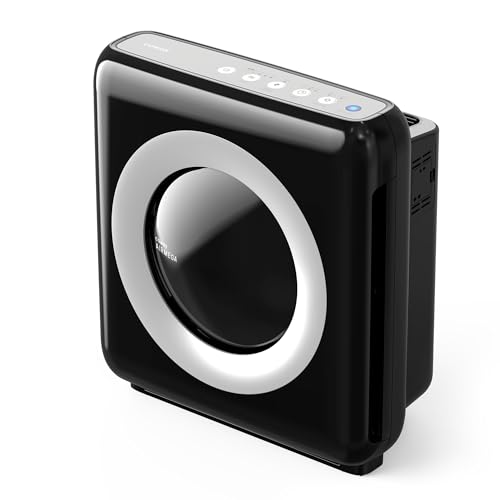
COWAY Air Purifier for Home Up to 1,748ft2, HEPA Filter for Smoke, Allergies, Pet Dander, Odor, Air Quality Monitor, Auto&Eco Mode, Timer, Filter Indicator, 3yr Warranty, Mighty AP-1512HH, Black
The Coway AP-1512HH costs more to buy but roughly $66 less to own over five years, because its filter is both cheaper and rated to last longer between changes.
Coverage claims vary in what air change rate they assume, so check a published airflow figure against your own room rather than the room size on the box.
| Winix 5510 (5500-2) | Coway AP-1512HH | |
|---|---|---|
| Unit price | $179.99 | $218.50 |
| Coverage claim | 1,881 sq ft | 1,748 sq ft |
| Filter price | $29.99 | $23.99 |
| Filter life claim | 8 months | 12 months |
| Filters over 5 years | 7.5 | 5 |
| 5 year total | $404.92 | $338.45 |
Why these two specific models get compared so often
The Winix 5500-2 and the Coway AP-1512HH have been two of the most recommended mid-size purifiers for years, both landing in a similar price and coverage class while using genuinely different filter designs and replacement ecosystems. That long overlap in the same buying decision is exactly why their five year cost, not just their spec sheets, is the detail worth working out before choosing between them.
Because both have been sold long enough to build a large secondary market of compatible replacement filters, from generic brands to genuine manufacturer parts, the effective cost of owning either one can vary further than the two data points in this comparison, depending entirely on which filter tier a buyer chooses to purchase repeatedly. That long track record is also why used and refurbished units of both models turn up often, which changes the unit price side of the math even further from the figures used here. A used unit at a steep discount can still make sense as long as you confirm the filter is not discontinued and factor a fresh filter purchase into the total cost right away.
The upfront price tells you the wrong thing
On price tag alone, the Winix 5510, sold as the direct successor to the long running 5500-2, looks like the better deal at $179.99 against $218.50 for the Coway AP-1512HH, a difference of $38.51. That gap disappears and reverses once you account for what each unit costs to keep running.
The Winix replacement filter costs $29.99 and carries an 8 month claim on its listing, meaning 7.5 filter changes over five years, or $224.93 in filters. Add that to the $179.99 unit price and total ownership over five years comes to $404.92.
The Coway replacement filter costs $23.99 with a 12 month claim, meaning 5 filter changes over five years, or $119.95 in filters. Added to the $218.50 unit price, total ownership comes to $338.45, about $66 less than the Winix despite costing more to buy on day one.
What you get for the higher upfront Coway price
The Coway AP-1512HH listing includes a washable pre-filter and an automatic mode, the same two features the Winix 5510 also carries. Both units are marked true HEPA on their catalog listings, and both list a coverage claim in the same general range: 1,748 square feet for the Coway against 1,881 square feet for the Winix.
Neither listing publishes a CADR figure under AHAM AC-1 for these two specific entries, which means the coverage claim is the closest sizing number available for either, with the usual caveat that a square footage claim depends on an unstated assumed air change rate.
What the Winix adds that Coway does not list here
The Winix 5510 listing marks wifi connectivity, which the Coway AP-1512HH entry here does not. If app control or scheduling matters to you, that is a real feature difference in the Winix favor, independent of the five year cost math.
Both units carry a particle sensor and automatic mode on their listings, so day-to-day operation, adjusting fan speed to what the sensor detects, works similarly on either. Neither listing here states a specific CADR figure, so the wifi difference and the shared sensor feature are the more concrete points of comparison available beyond the five year cost math.
Why the filter interval matters more than the filter price alone
A cheaper filter that needs replacing more often can still cost more per year than a pricier filter that lasts longer. The Coway filter is $6 cheaper per unit than the Winix filter, but the real gap comes from the replacement interval: 12 months against 8 months. That difference means the Coway needs 2.5 fewer filter changes across a five year window, which is where most of its $66 advantage comes from.
Run the same arithmetic yourself before trusting any five year figure, including this one: divide 60 months by the manufacturer filter life claim to get filters needed, multiply by the filter price, then add the unit price. For the Winix that is 60 divided by 8, which is 7.5 filters, times $29.99, which is $224.93, plus $179.99, for $404.92. For the Coway it is 60 divided by 12, which is 5 filters, times $23.99, which is $119.95, plus $218.50, for $338.45.
Before buying either on the strength of this math, check the specific listing for whichever exact model and filter pack you plan to purchase, since sellers and pack sizes shift the effective per-filter price over time. A multi-pack filter purchase can lower the effective per-unit cost further on either brand, which would shrink the gap shown here without changing which one still comes out ahead. Setting a calendar reminder at your stated filter interval, rather than waiting for a visible performance drop, keeps you on the manufacturer schedule the math above assumes.
Noise, placement and who each one actually suits
Both units are sized for a similar class of room, roughly the size of an open living area or a large bedroom, based on their coverage claims of 1,881 and 1,748 square feet. Neither catalog listing compared here states a noise level in decibels, so if quiet operation at the lowest fan speed is a priority for a bedroom, check the specific listing you are considering directly rather than assuming based on brand.
The particle sensor and automatic mode on both units means either one can be left running unattended, adjusting fan speed up when it detects more particulate and down when the air is already clean. This matters most for someone who wants to set the unit and not think about it, rather than manually switching fan speeds through the day.
A renter or someone who moves often may lean toward whichever unit is easier to find replacement filters for locally or through a subscription, since running out of a filter and delaying a change reduces real world performance regardless of which unit looks better on paper for five year math. An allergy sufferer prioritizing continuous, unattended operation over five years of ownership cost is the buyer profile this comparison is aimed at most directly, since both units otherwise cover a similar room size and both are marked true HEPA.
What this comparison does not tell you
Neither listing compared here publishes a CADR figure, so this comparison cannot tell you how many actual cubic feet of clean air per minute either unit delivers, only what each one claims to cover in square feet and what each one costs to own. If a CADR number is published elsewhere for either specific model you are considering, that figure is worth checking against your room dimensions directly using the two thirds rule or a CADR calculator before finalizing a decision.
This comparison also does not cover noise output, physical footprint, or exact fan speed count, since none of those are stated on the specific listings used here. Treat the cost breakdown above as one input to a purchase decision, not the whole picture.
Equipment mentioned on this page
- Borgodf
Borgodf B-D02L/M05 Replacement Filter for MOOKA B-D02L & M05 Air Purifier
- HEPA claimed
- carbon stage
$17.98 Check pricePrices change often - Sinnya
12020 11020 HEPA Replacement Filter for Clorox Air Purifier 11020 & 11021
- HEPA claimed
$19.66 Check pricePrices change often - Cabiclean
Blue Pure Replacement Filter for Blueair 411, 411+, 411 Auto Air Purifier
- carbon stage
$19.89 Check pricePrices change often - Clorox
Clorox Tabletop Air Purifier True HEPA Replacement Filter, 200 Sq. Ft.
- HEPA claimed
$19.99 Check pricePrices change often - Borgodf
2 Pack HP102 Replacement Filter Compatible with Shark HP102 Air Purifier
- HEPA claimed
- carbon stage
$21.37 Check pricePrices change often




Common questions
Is the Winix 5510 the same purifier as the 5500-2?
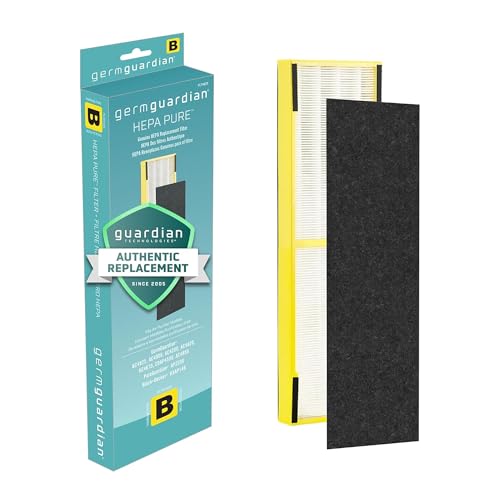
The 5510 is sold as the new generation of the 5500-2, sharing the same 116130 Filter H replacement filter family and a similar footprint. If you already own a 5500-2, the filter costs and replacement interval shown here for the 5510 apply to your unit as well.
Why does Coway win on cost despite a higher purchase price?
The Coway AP-1512HH filter is both cheaper per unit, $23.99 against $29.99, and rated to last longer between changes, 12 months against 8 months. Both factors push the total number of filters needed over five years down, which outweighs the $38.51 higher upfront unit price.
Do either of these list an actual CADR number?
No, neither listing compared here publishes an AHAM AC-1 CADR figure. Both state a coverage claim in square feet instead, which is a less precise sizing tool since it depends on an air change rate the brand does not state alongside the number.
Does the Coway AP-1512HH have wifi like the Winix?
Not on this listing. The Winix 5510 entry marks wifi connectivity for app control; the Coway AP-1512HH entry does not carry that flag, which may matter if remote control or scheduling is a priority for you.
Can I use a cheaper third party filter to close the gap further?
Yes, compatible filters exist for both the Winix 5500-2 family and the Coway AP-1512HH, sometimes below the genuine filter price shown here. Fit and filtration quality vary by seller, so check that the specific listing states compatibility with your exact model before buying.