Best air purifiers for mold spores
Quick answer
A true HEPA purifier like the PuroAir 400 (B0C3FXZLZ5, $259.99) captures mold spores already suspended in the air, but it does not stop mold from growing; that requires getting indoor relative humidity under 60 percent first.
This is the honest one: filtration treats a symptom of a moisture problem, not the moisture itself, and no purifier on this page changes that fact.
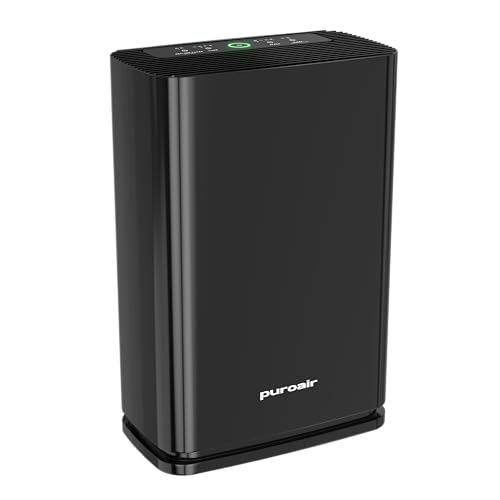
PuroAir 400 HEPA Air Purifiers for Home Large Room Pets Filter 2,000 Ft2
The PuroAir 400 pairs true HEPA with a carbon stage in a 2,000 square foot claim, capturing airborne mold spores and reducing the musty smell that comes from mold growth, without doing anything about the humidity causing it.
Coverage claims vary in what air change rate they assume, so check a machine's published airflow against your own room rather than the room size on the box.
The three tiers
Beginner: Best for one damp-prone room
Who it is for: a single room with occasional mustiness, such as a bathroom-adjacent bedroom
- Beginner pick
Clorox Large Room HEPA Air Purifiers for Home With True HEPA Filter
- HEPA claimed
$149.99 Check pricePrices change often
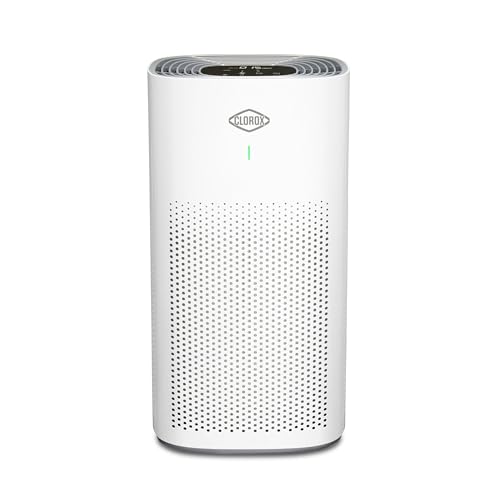
The Clorox Large Room true HEPA purifier (B098C92GSK, $149.99) has a 320 square foot claim, enough for a single room, and captures airborne spores while a separate humidity fix is worked out.
Not for: an actual basement or crawl space with a known moisture source
Intermediate: Best for a basement or mudroom
Who it is for: a basement, mudroom or laundry area with a moderate mustiness problem
- Intermediate pick
PuroAir 240 HEPA Air Purifiers for Home Pets Bedroom - 1,000 Ft2
- HEPA claimed
- carbon stage
$159.99 Check pricePrices change often

The PuroAir 240 (B0998FWTHP, $159.99) combines true HEPA and carbon in a 1,000 square foot claim, suited to a basement-sized space while the actual moisture source is addressed separately.
Not for: a large finished basement or an open lower level
Expert: Best for a large or finished basement
Who it is for: a large finished basement or an open lower level with a persistent musty smell
- Expert pick
MOOKA Air Purifier for Home Bedroom Large Room 2200 Ft2, HEPA Filter, Black
- HEPA claimed
- carbon stage
- washable pre-filter
- particle sensor
- auto mode
- has a UV lamp
$84.18 Check pricePrices change often

This 2,200 square foot MOOKA unit (B0DPJXG31H, $84.18) adds a washable pre-filter and true HEPA plus carbon at a larger scale. It has a switchable UV mode; leave it off, since the HEPA and carbon stages are what actually capture spores and odor.
Not for: anyone expecting a purifier alone to solve a mold problem
| What a purifier does | What it does not do |
|---|---|
| Captures airborne mold spores already in the room | Kill mold growing on a surface |
| Reduces musty odor via a carbon stage | Lower indoor humidity |
| Runs continuously while a moisture fix is made | Fix the moisture source causing growth |
What does an air purifier actually do about mold?
A true HEPA filter captures mold spores that are already airborne, the same mechanical process it uses for pollen, dust or smoke particulate. That is a real and useful function: reducing the measured concentration of airborne spores in a room lowers ongoing exposure while a moisture problem is being addressed, which is genuinely worth doing even though it is only half of the fix.
What it does not do is anything about mold already growing on a wall, in a wall cavity, or on damp material. Spores that have colonized a surface keep producing new spores whether or not a purifier is running nearby, because the purifier has no access to the surface itself; it only ever intercepts what has already become airborne and drifted into its airflow, leaving the colony behind untouched.
Why does humidity matter more than filtration for a mold problem?
Mold needs moisture to grow, and indoor relative humidity is the practical lever most households can control. Indoor relative humidity belongs between 30 and 50 percent; above 60 percent, conditions support both mold growth and dust mite populations. A room sitting at 65 or 70 percent relative humidity will keep growing mold regardless of how much filtration is running, and no amount of purifier CADR changes that underlying moisture math.
This is the reason a mold problem should start with a hygrometer reading and a plan to bring humidity under 60 percent, not with a purifier purchase. A dehumidifier addresses the actual growth condition; a purifier addresses the spores that condition is producing, and buying only one of the two leaves the other half of the problem in place indefinitely, however good either machine is on its own terms.
Should a purifier and a dehumidifier run in the same room?
Yes, and they solve different halves of the same problem rather than competing. A dehumidifier pulls moisture out of the air, working toward the under-60-percent target that stops new mold growth, while a purifier captures spores already circulating from existing growth or from a source that has not yet been fully remediated.
A basement recommended for the Expert tier here would reasonably run both: a dehumidifier sized to its square footage, covered on this site’s dehumidifier calculator and basement dehumidifier review, alongside the purifier picks on this page. Running a purifier alone in a persistently damp basement treats one symptom while the underlying condition keeps producing more, and running a dehumidifier alone leaves existing airborne spores uncaptured even as new growth slows.
Does a carbon stage help with the musty smell specifically?
Musty odor comes from microbial volatile organic compounds that mold produces as it grows, which is a different chemical category from the spores themselves. HEPA media captures particulate, including spores, but does not adsorb these odor compounds; a carbon stage is what pulls them out of the air, adsorbing the compounds rather than filtering them mechanically the way HEPA media does.
Every pick on this page, from the Beginner tier through the top pick, includes both true HEPA and a carbon stage for this reason. A purifier with HEPA alone would capture spores but leave the musty smell largely unaddressed, which is often the first thing a household notices even before checking whether spore counts have actually dropped.
What about the switchable UV or ionizer mode on some larger units?
The Expert tier pick here includes a switchable UV mode, and it should be left off. Ionizer and some UV or plasma technologies can produce ozone as a by-product, which is harmful in occupied rooms, and California’s CARB regulates ozone emissions from indoor air cleaning devices for that reason. Manufacturer marketing sometimes suggests UV light kills mold spores in the airstream, but that claim is not something this page verifies for any specific product, and it does not change the humidity problem regardless of whether it is true for a given unit.
The true HEPA and carbon stages are doing the actual, verifiable work on every pick recommended here. Running the UV mode adds a potential ozone tradeoff without adding filtration capacity, which is not a trade worth making for an unverified odor or spore-kill benefit.
When does a mold problem need more than a purifier and a dehumidifier?
Visible mold growth covering a significant area, a persistent musty smell that does not improve once humidity is brought under 60 percent, or mold returning repeatedly in the same spot usually points to an active moisture source, such as a leak, poor grading outside, or inadequate ventilation, that filtration and dehumidification alone will not resolve, no matter how well either device is sized for the room.
In those cases, addressing the moisture source directly, whether that is a repair, added ventilation or professional remediation, is the step that actually stops the growth. A purifier and a dehumidifier are ongoing management tools for airborne spores and ambient moisture; neither replaces fixing a leak or a structural moisture problem, and treating them as if they did just delays a repair that will need to happen eventually anyway.
Does a purifier’s square footage claim matter for mold, and how do you know a smell is actually mold?
Coverage claims matter somewhat less for mold than for smoke, because mold spores are not an active source in the same continuous sense that wildfire smoke is; a colonized surface releases spores at a relatively steady background rate rather than flooding a room the way an outdoor fire does. That said, the same general-purpose arithmetic applies: required CADR in CFM is floor area times ceiling height times air changes an hour, divided by 60, and a manufacturer claim built on a slower assumed rate will overstate real coverage for a basement or crawl space of a given size, the same overstatement problem covered in more detail on this site’s smoke purifier page.
A basement is also frequently a larger, more open space than a bedroom, so the coverage claims on this page skew toward the 1,000 to 2,200 square foot range specifically to match that room type, rather than the smaller claims suited to a single bedroom purifier, since a smaller unit would leave much of an open basement floor uncovered.
A musty smell alone does not confirm active mold growth; it can come from general dampness, mildew on a surface that has not fully colonized, or even a stagnant HVAC condensate line. Visible discoloration on a wall, ceiling or fabric, especially in a pattern that follows a known moisture path such as a window frame or a foundation wall, is a stronger sign of actual growth than smell by itself, though even that is not a certain identification without closer inspection.
Because this page does not perform in-person inspection of any reader’s specific space, it cannot confirm whether a given smell or discoloration is mold in a particular case. A hygrometer reading showing sustained humidity above 60 percent, combined with either smell or visible growth, is a reasonable trigger to act on both filtration and dehumidification rather than waiting for a more definitive test, and a professional inspection remains the more reliable route for a genuinely uncertain case.
How we chose
Every product on this page was researched from published manufacturer specifications and owner reports on retail listings, not from in-person testing in a moldy environment.
Selection prioritized true HEPA media for spore capture and a carbon stage for musty odor, sized to a range of room types from a single damp bedroom up to a large finished basement.
Buying tips
Should I buy a purifier or a dehumidifier first for a musty room?
Start with a hygrometer reading. If relative humidity is above 60 percent, a dehumidifier addresses the actual growth condition; a purifier without it only manages the spores that condition keeps producing.
Does a bigger purifier solve a mold problem faster?
A larger unit captures more airborne spores per hour in a bigger space, but it does not change the underlying moisture level. Sizing correctly for the room matters more than buying the largest available unit.
Is UV light a real mold solution in an air purifier?
This page does not verify UV kill claims for any specific product, and UV or ionizer modes can carry an ozone tradeoff. The true HEPA and carbon stages are the parts of these units doing confirmed, testable work.
Other options worth knowing about
- MOOKA
MOOKA H13 HEPA Air Purifier for Home Pet Large Room Up to 1300ft2, Black
- HEPA claimed
- carbon stage
- has a UV lamp
$46.98 Check pricePrices change often - MOOKA
MOOKA Air Purifiers for Home Room up to 1076ft2, True HEPA Filter, B-D02L
- HEPA claimed
- carbon stage
$49.99 Check pricePrices change often - MOOKA
MOOKA Air Purifiers for Home Room up to 1076ft2, True HEPA Filter, B-D02L
- HEPA claimed
- carbon stage
$49.99 Check pricePrices change often - Clorox
Clorox Small Room Air Purifiers for Bedroom Home, True HEPA Filter
- HEPA claimed
$59.95 Check pricePrices change often - Afloia
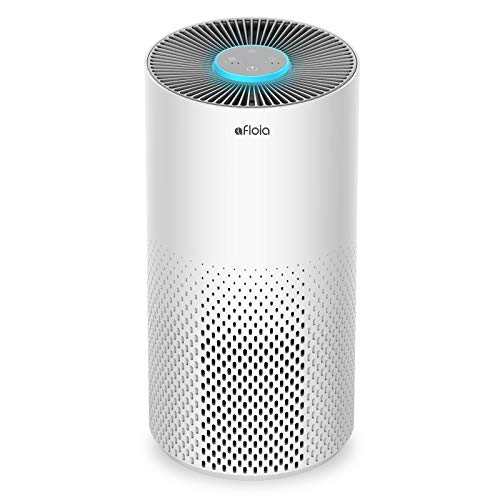
Afloia Air Purifier for Home Bedroom Large Room up to 1500 Sq Ft
- washable pre-filter
$59.97 Check pricePrices change often


Common questions
Will an air purifier get rid of mold in my basement?
It will capture mold spores already suspended in the air, reducing airborne concentration, but it will not eliminate mold growing on a surface or in a wall cavity, and it does nothing about the moisture causing that growth. A purifier is a management tool for airborne spores, not a fix for the underlying mold or its moisture source.
What humidity level stops mold from growing indoors?
Indoor relative humidity should stay between 30 and 50 percent. Above 60 percent, conditions support both mold growth and dust mite populations. Bringing a damp room under 60 percent relative humidity, typically with a dehumidifier, addresses the actual growth condition in a way filtration alone cannot, since no purifier changes how much moisture is in a room.
Should I run a purifier and a dehumidifier together in a damp basement?
Yes, they address different parts of the same problem. A dehumidifier lowers relative humidity toward the under-60-percent target that stops new mold growth, while a purifier captures spores already circulating from existing growth. Running only a purifier in a persistently damp space leaves the moisture condition unaddressed, and running only a dehumidifier leaves existing airborne spores uncaptured.
Does a HEPA filter remove the musty smell from mold, not just the spores?
Not on its own. HEPA media captures particulate, including mold spores, but the musty smell comes from separate volatile compounds that HEPA media does not adsorb. A carbon stage is what removes those odor compounds, which is why every purifier recommended on this page pairs true HEPA with carbon rather than relying on HEPA filtration by itself.
Is UV light in an air purifier effective against mold spores?
This page does not verify a kill-rate claim for UV light in any specific product listed here, and UV or ionizer modes can produce ozone as a by-product, which is harmful in occupied rooms. The confirmed, testable work in these units comes from the true HEPA and carbon stages, not the UV mode.
When does a mold problem need more than a purifier and dehumidifier?
When there is visible mold covering a significant area, a musty smell that persists after humidity is brought under 60 percent, or mold returning repeatedly in the same spot. Those signs usually point to an active moisture source, such as a leak or poor drainage, that needs a direct repair rather than ongoing filtration and dehumidification alone.